Sauna Benefits for Women: Cycle-Synced Timing, Menopause Relief, Hormones & the 195°F Protocol
Most sauna research was conducted on men. This guide rebuilds it from the ground up — for your hormones, your cycle, your perimenopause, and your life.

Roughly 75% of women going through menopause experience hot flashes and other vasomotor symptoms — and yet, when researchers want to study how sauna use affects the body, the foundational studies were conducted almost entirely on Finnish men. The 2,300-participant Kuopio study that gave us most of what we know about cardiovascular benefit, dementia risk, and longevity? All male. The growth-hormone studies? Mostly male. The 25-year follow-ups that anchor every wellness blog you've ever read? Male, male, male.
That gap matters. Your body's relationship with heat is different from a man's — it shifts across your menstrual cycle, it reorganizes itself in perimenopause, and it interacts with estrogen, progesterone, and cortisol in ways that change what an effective sauna session even looks like for you. The good news: when researchers do study women, the core benefits hold up beautifully. The cardiovascular protection, the brain health, the sleep quality, the stress regulation — all of it applies. You just need a slightly different operating manual.
This is that manual. It's the guide we wish existed when our female members at Lost in Float in Lincoln, NE first started asking the questions: Should I sauna during my period? Will the heat make my hot flashes worse? How hot is too hot? We've pulled together the research, organized it by life stage and cycle phase, and built a practical 4-week starter plan you can actually follow.
Quick takeaway: The cardiovascular, brain, sleep, and longevity benefits of sauna apply equally to women. What's different is the timing, the temperature ceiling, and how much you need to listen to your body in the second half of your cycle and through perimenopause. This guide walks you through all of it.
The 9 Core Sauna Benefits for Women
Below are the benefits that have either (a) strong research support in women specifically, or (b) strong research support in mixed-sex or male-only studies with biological mechanisms that translate cleanly to women. Where the evidence is preliminary, we've said so.
Bottom line on benefits: Sauna delivers cardiovascular, brain, sleep, immune, hormonal, and cellular benefits that apply directly to women's bodies. The evidence is strongest for cardiovascular and brain outcomes; the mechanisms behind the rest are well-established even where female-specific trials are still emerging.
Cycle Timing: When to Sauna, When to Ease Off
Your body's relationship with heat changes across your menstrual cycle. The shifts are real, physiologically measurable, and worth understanding — not because you need to plan rigidly, but because it helps you interpret what you're feeling and avoid pushing against signals your body is sending.
Heat Tolerance by Menstrual Phase — Quick Reference
| Phase | Days | Heat Tolerance | Practical Tip |
|---|---|---|---|
| Menstrual | 1–5 | Listen to body | Optional. If you go in, shorter rounds (8–12 min), lower bench, extra hydration. |
| Follicular | 6–13 | High | Your best window. Longer rounds, higher bench, contrast therapy welcome. |
| Ovulatory | ~14 | Peak | Most comfortable, most energizing. Push protocols here if you want to. |
| Luteal | 15–28 | Moderate | Body temp is +0.5°F higher. Shorten rounds, hydrate more, don't compare to follicular. |
Progesterone raises basal body temperature by approximately 0.5°F after ovulation. This means your starting point in the sauna is slightly higher — your body reaches heat-stress thresholds faster. This isn't a reason to avoid sauna in the luteal phase; it's a reason to calibrate. Starting at a lower bench, taking shorter rounds, and allowing more cool-down time will produce equivalent physiological benefit with less perceived exertion. Track how you feel across 2–3 cycles and you'll quickly develop an intuitive sense of your personal pattern.
Sauna for Perimenopause & Menopause
For women in perimenopause and menopause, the sauna's benefits go well beyond general wellness. This is where the research gets specifically interesting — heat therapy targets several of the exact mechanisms that estrogen decline disrupts.
Thermoregulation training (for hot flashes)
Hot flashes occur because declining estrogen narrows the hypothalamic thermoneutral zone — the comfortable temperature range your body normally tolerates without triggering a heat-dissipation response. With that zone narrowed, small elevations in core body temperature now cross the threshold and set off the full hot flash cascade: peripheral vasodilation, sweating, the chill afterward (Freedman, 2014). The mechanism is well-mapped; effective non-hormonal interventions are still limited.
The case for heat exposure rests on biology: heat acclimation widens the thermoneutral zone in healthy populations, and chronic heat stress restores heat shock protein production — the same HSPs that decline alongside estrogen and are mechanistically tied to vasomotor symptom regulation (Miragem & Homem de Bittencourt, 2017). Direct clinical-trial evidence that sauna specifically reduces hot flash frequency is still preliminary — most of what exists is small, short-duration, or focused on infrared rather than traditional sauna. What members consistently report, and what the mechanism predicts, is that regular heat exposure makes the system less reactive over time. We've kept the language careful here on purpose: this is plausible, mechanistically sound, and reported by many — not yet established by large randomized trials.
Heat shock proteins & estrogen signaling
Heat shock proteins (HSPs) — produced during every sauna session — are directly tied to estrogen receptor function and cellular stress resistance (Miller et al., 2005; Hamilton et al., 2004). When estrogen declines, HSP production declines too. Regular heat exposure provides an alternative stimulus for HSP production that doesn't require estrogen — effectively maintaining some of the cellular protection that declining estrogen would otherwise reduce.
Cardiovascular protection
Post-menopausal women's cardiovascular risk rises sharply once estrogen's protective effects fade. Sauna-induced improvements in vascular function, blood pressure regulation, arterial stiffness, and inflammatory markers directly target the same pathways estrogen previously supported. For women who cannot or choose not to use HRT, sauna is one of the most evidence-supported lifestyle interventions for post-menopausal cardiovascular health.
Sleep, mood & nervous system regulation
The hormonal turbulence of perimenopause hits sleep and mood hardest. Evening sauna paired with cool-down primes the post-sauna temperature drop that signals sleep onset. Heat-induced parasympathetic activation also helps reset a nervous system that's been running hot from years of caregiving, career demands, and hormonal flux all at once.
"I started sauna three times a week at 52, mostly for the hot flashes. I'd read everything else wasn't working — black cohosh, deep breathing, the fan I was carrying everywhere. Within about a month, the night flashes were noticeably less intense. By month three, I was sleeping through the night again. I'm not saying it's a cure. I'm saying it's the only thing that's actually moved the needle for me."
— Lost in Float member, age 54
"Perimenopause caught me off guard. The anxiety more than anything. My daughter recommended I try the Fire & Ice suite — sauna and cold plunge together — and it became my Tuesday and Friday. Something about the contrast resets me in a way nothing else has. I leave there feeling like I'm in my body again."
— Lost in Float member, age 47
"The key to navigating menopause for me has been sauna for 30 minutes followed by cold plunge. It's like nothing I've ever experienced before, and I wish I had learned about it years ago."
The 195°F Sweet Spot — and Why Hotter Isn't Better
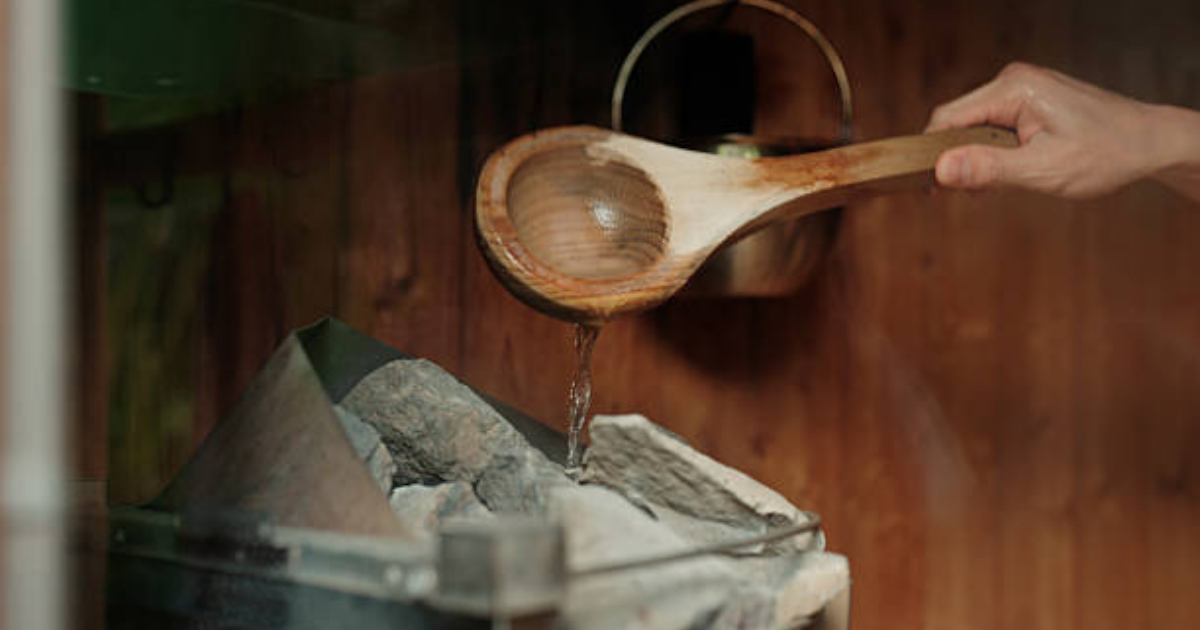
Our sauna runs at 195°F (90°C) — and that temperature is deliberate. Emerging research suggests a meaningful upper threshold for brain health: a Finnish observational study of nearly 14,000 men and women found that sauna use at 176–210°F (80–99°C) produced protective effects against dementia, while at temperatures above 212°F (100°C), dementia risk roughly doubled (HR 2.04) (Knekt et al., 2020).
At 195°F, we sit comfortably in the protective range — hot enough to drive cardiovascular response and heat shock protein production, without crossing the threshold where extreme heat may become harmful.
Why this matters specifically for women
Women generally have smaller body mass and faster heat-up rates than men. A 215°F sauna isn't twice as good as a 195°F one — it's a faster ride to perceived limit, which usually means shorter sessions and more nervous-system stress. The 195°F range is accessible for the longer, more relaxed sessions that allow the full parasympathetic and heat adaptation response to develop. For women in the luteal phase, perimenopause, or anyone with a lower baseline tolerance, this is the difference between a session that helps you and one that just exhausts you.
Safety notes — when to ease off the heat
- If you feel dizzy, nauseated, or your heart races abnormally: step out immediately, cool down, hydrate. This is non-negotiable.
- If you're newly perimenopausal and the heat triggers a hot flash mid-session: step out, cool down, then return when ready. Over weeks, this will happen less.
- If you have low blood pressure, dehydration, or have just had alcohol: skip sauna until those conditions are corrected. Heat plus low BP is a fainting risk.
- If you're newly pregnant or trying to conceive: see the FAQ. The first trimester is the period of heightened risk.
Your Sauna Options at Lost in Float (Lincoln, NE)
Ready when you are
Free daily sauna access with any membership — or $13 drop-in. Open Tue–Sun, 9am–9pm, with extended hours for members. Right here in Lincoln, NE.
Book a session → See membershipsThe Practical Protocol — Step by Step
Here's the protocol we recommend to women starting out, refined from what the research supports and what actually works for our members. Whether you're using sauna for sleep, hot flashes, recovery, or just because you love it — these steps apply.
Hydrate before you go in
16 oz of water with a pinch of salt or electrolytes about 30 minutes before your session. You'll lose more fluid than you think — especially in the luteal phase or first days of menstruation.
Start on the lower bench
Heat rises. The lower bench is meaningfully cooler than the upper. Beginners and luteal/menstrual-phase sessions should start there. You can always move up.
10–15 minutes per round to start
Build to 15–20 minutes per round as you adapt. The full Finnish protocol is 2–3 rounds with cool-downs between. Don't push through nausea or dizziness — those are stop signals.
Cool down properly between rounds
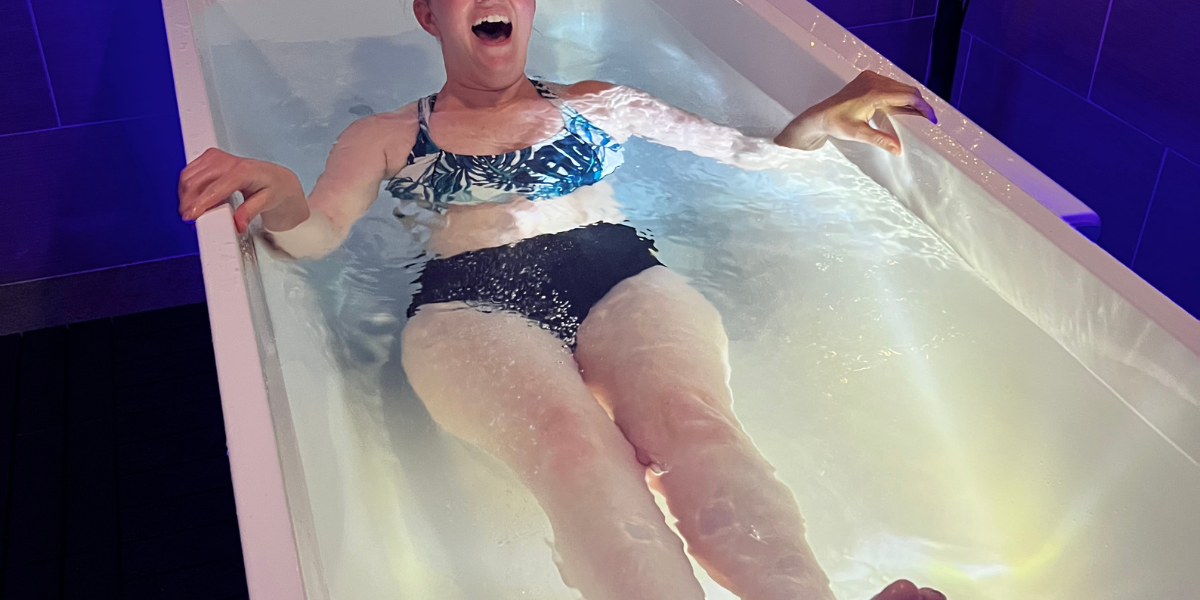
2–5 minutes outside the sauna — cold shower, cold plunge, or just cool air. The contrast is where much of the cardiovascular benefit lives. For women managing hot flashes, the cool-down step is the part most members say they feel the next morning.
Frequency: aim for 3–4 sessions per week
This is where meaningful benefit accumulates. Daily use shows continued returns in the longevity data, but 3–4x per week captures most of the benefit. Start at 2x and build.
Time it for your goal
Evening sauna primes sleep through the post-sauna temperature drop. Morning sauna sets cortisol tone and energizes the day. Both are valid — pick the one that fits your life and stick with it.
The 4-Week Beginner Plan
If you're new to sauna, here's a starter plan that builds tolerance gradually and respects your cycle. Adjust to your follicular and luteal phases as needed.
Women's Sauna Cycle Tracker
The 7-page fillable tracking kit: two 28-day cycle logs, a dedicated menopause & perimenopause log (no cycle required), a one-page protocol cheat sheet, and end-of-cycle insights. Print it or type right into it — yours to reuse every cycle.
Lost in Float member? The tracker is included in your membership perks — reach out to us at desk@lostinfloat.com and we'll send it over for you.
Frequently Asked Questions
Studies Referenced
For readers who want to dig into the research behind this guide:
- Laukkanen T, Kunutsor SK, Khan H, Willeit P, Zaccardi F, Laukkanen JA. (2018). Sauna bathing is associated with reduced cardiovascular mortality and improves risk prediction in men and women: a prospective cohort study. BMC Medicine.
- Laukkanen T, Kunutsor S, Kauhanen J, Laukkanen JA. (2017). Sauna bathing is inversely associated with dementia and Alzheimer's disease in middle-aged Finnish men. Age and Ageing.
- Knekt P, Järvinen R, Rissanen H, Heliövaara M, Aromaa A. (2020). Does sauna bathing protect against dementia? Preventive Medicine Reports.
- Leppäluoto J, Huttunen P, Hirvonen J, Väänänen A, Tuominen M, Vuori J. (1986). Endocrine effects of repeated sauna bathing. Acta Physiologica Scandinavica.
- Kunutsor SK, Laukkanen T, Laukkanen JA. (2017). Sauna bathing reduces the risk of respiratory diseases: a long-term prospective cohort study. European Journal of Epidemiology.
- Ahokas EK, Kyröläinen H, Ihalainen JK, Hanstock HG. (2025). Salivary cortisol response to post-exercise infrared sauna declines over time. Temperature.
- Miller H, Poon S, Hibbert B, Rayner K, Chen YX, O'Brien ER. (2005). Modulation of estrogen signaling by the novel interaction of heat shock protein 27, a biomarker for atherosclerosis, and estrogen receptor beta. Arteriosclerosis, Thrombosis, and Vascular Biology.
- Hamilton KL, Mbai FN, Gupta S, Knowlton AA. (2004). Estrogen, heat shock proteins, and NFκB in human vascular endothelium. Arteriosclerosis, Thrombosis, and Vascular Biology.
- Milunsky A, Ulcickas M, Rothman KJ, Willett W, Jick SS, Jick H. (1992). Maternal heat exposure and neural tube defects. JAMA.
- Freedman RR. (2014). Menopausal hot flashes: mechanisms, endocrinology, treatment. Journal of Steroid Biochemistry and Molecular Biology.
- Miragem AA, Homem de Bittencourt PI Jr. (2017). Nitric oxide–heat shock protein axis in menopausal hot flushes: neglected metabolic issues of chronic inflammatory diseases associated with deranged heat shock response. Human Reproduction Update.
Keep Reading
If this guide was useful, these companion articles go deeper on related topics:
- The Perimenopause & Menopause Wellness Protocol That Actually Helps — coming soon
- Cold Plunging for Women: What's Different, What Works, How to Start
- First Time in a Sauna? Everything You Need to Know Before You Go
- Traditional Sauna vs. Infrared: The Honest Comparison
- The Fire & Ice Contrast Suite — Private Sauna + Cold Plunge
Like this? Get our Weekly Stack.
The latest and greatest wellness tips, tools & inspiration sent your way every Wednesday morning.
Sign me up →Not medical advice. This guide is informational and research-based, written to help you make informed decisions. It is not a substitute for medical advice from your healthcare provider. If you have health conditions, are pregnant, are on medications affecting blood pressure or heart rate, or have specific concerns about sauna use, talk with your doctor before starting.