
Your first float will not be your best float.
That's not a criticism. It's just the honest truth — and it's true for almost everyone, regardless of how open-minded, how relaxed, or how experienced with meditation they are. The first float is about learning. Every float after that is about going deeper.
Understanding what actually changes between your first session and your tenth is one of the most useful things you can know before you start — because it sets the right expectations, keeps you coming back, and helps you get the most out of every session at Lost in Float.
Your First Float: What's Actually Happening
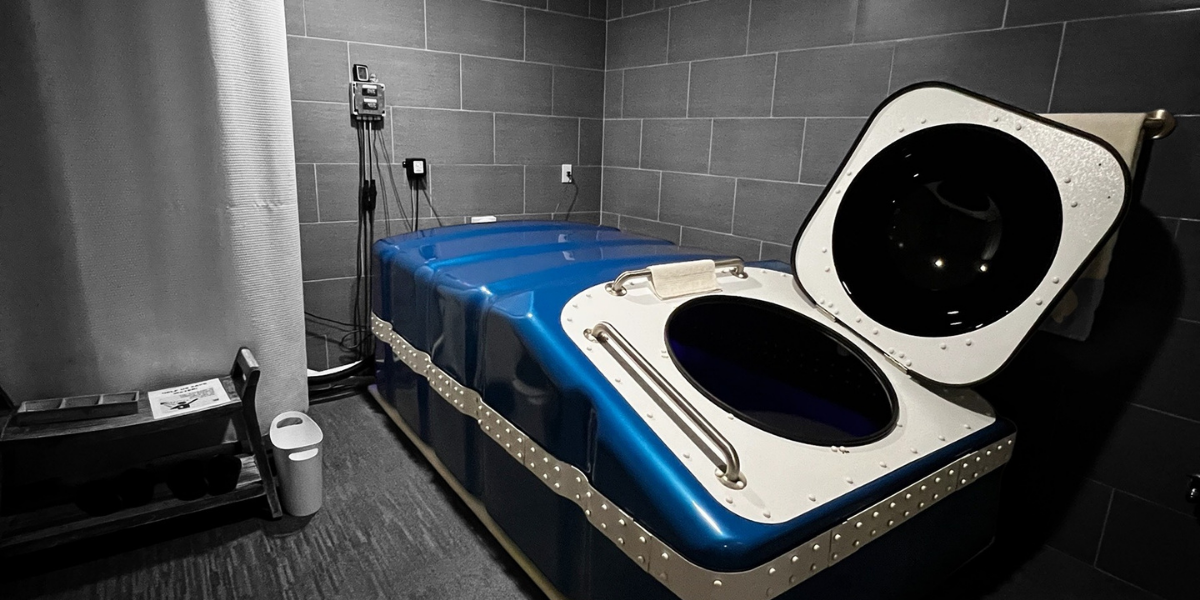
You walk into the suite. It's impeccably clean — the kind of clean that makes you immediately relax a degree before you've even seen the tank. The shower is private. The towels are fresh. Everything you need is already there: earplugs, ear wash, Vaseline for any sensitivities, a neck pillow if you want it. Your only job is to get in.
You shower, climb in, and close the lid or pull the door. The lights go off. The room goes silent.
And then your brain — the one that's been running at full speed for years — tries to find something to do.
Your brain is accustomed to processing thousands of inputs per second — light, sound, gravity, temperature, physical contact. When all of those inputs disappear simultaneously, the brain doesn't immediately relax. It first goes looking for them. This is why the first 10-20 minutes of most first floats feel busy rather than peaceful. You notice every itch. You hear your own heartbeat. Thoughts race. This is completely normal. It's neurological withdrawal from stimulation.
Most first-time floaters cross a threshold around the 20-minute mark. The mind stops looking for inputs that aren't there and starts inhabiting the stillness instead. The shoulders drop. The jaw unclenches. The spine lengthens. For many people, the last 30-40 minutes of their first float is unlike anything they've experienced — a quality of quiet they didn't know was available to them.
But it's just the beginning.
Floats 2 and 3: The Nervous System Learns
Something important happens between your first and third float: your nervous system starts to remember.
The transition from beta to theta — from active thinking to deep restful awareness — takes practice. Not because floating is hard, but because your nervous system has spent years learning to stay vigilant. The first float starts to teach it that the float environment is safe. The second float reinforces that. By the third, most people find the transition happens faster and the depth increases noticeably.
The water chemistry, the room-within-a-room soundproofing, and the precisely controlled temperature and humidity in each of our suites matter more now than they did on float one — because now your nervous system is actually able to use the environment fully. Any inconsistency in the room conditions would be more noticeable to a nervous system that's learning to be still than to one that was busy adjusting on day one.
This is part of why we've invested so heavily in the physical environment at Lost in Float. The first float is somewhat forgiving. The tenth is not. By then, your nervous system is refined enough to feel every imperfection.
Floats 4 Through 7: The Benefits Start to Compound
Around the fourth float, something shifts in the days between sessions. People start noticing that the calm from their last float is still with them — a lower baseline of stress, a quicker return to equilibrium after difficult moments, a sleep quality that's improved in a way they can't fully explain.
This is the compounding effect. Float therapy doesn't just relax you for the day of your session. It trains your nervous system to access that parasympathetic state more easily outside the tank. Cortisol levels drop not just during sessions but measurably between them. The theta state — which your brain accesses during float — becomes easier to enter in other contexts too.
Regular floaters also report a progressive deepening of the in-tank experience itself:
- The transition from beta to theta takes 5-10 minutes instead of 20
- The theta state goes deeper — more vivid, more expansive, more genuinely restorative
- Physical benefits intensify — muscles release more completely, spinal decompression feels more profound
- The post-float glow lasts longer — some members report 3-5 days of noticeably elevated mood and clarity
Float 10 and Beyond: A Completely Different Practice
By float ten, you are not the same person who walked in for float one.
Your nervous system has been trained. Your brain knows exactly what the float environment means and transitions into it within minutes. The theta state isn't something you stumble into after 20 minutes of mental noise — it's something you enter deliberately, like settling into a chair you've sat in hundreds of times.
"By float ten, the tank isn't new anymore. It's yours. And what you do inside it is entirely different from what you did on day one."
Many of our most regular members describe their float practice as the most important hour of their week — not because they need it to function, but because it's the only time in their entire week where genuine stillness is not only possible but inevitable. No phone. No demands. No inputs. Just the silence we've built into the walls, the water we've spent years calibrating, and a nervous system that's learned — finally — what it actually means to rest.
Why the Environment You Float In Matters More Over Time
Here's something worth knowing before you choose where to float: the quality of the physical environment becomes more important, not less, as your practice deepens.
A first-time floater experiencing sensory deprivation for the first time is so overwhelmed by the novelty that minor imperfections — a distant sound, a slight humidity imbalance, water chemistry that's slightly off — don't register. The experience is still powerful even in a mediocre environment, because any sensory deprivation is more than they've ever had.
But by float five, six, seven — a trained nervous system notices everything. A slightly cold room interrupts the skin-temperature illusion. An HVAC hum that penetrates a standard wall pulls the brain back to beta. Water that hasn't been properly maintained creates skin irritation that breaks the physical stillness.
This is why we built our suites the way we built them. Room within a room acoustic construction. Active humidity and temperature monitoring adjusted for Nebraska's weather on any given day. Water chemistry tested and corrected between every single session. Complete privacy. Everything provided.
We built this for the person on their tenth float, not just their first. And that's what keeps people coming back.
Start your float practice in Lincoln NE
The first float opens the door. Everything after that is deeper. From $75 — or float regularly with a membership from $69/month.
Book your first float → See membershipsHow to Get the Most Out of Every Float
Float 1: Let go of expectations. The goal isn't a perfect meditation — it's just getting comfortable in the environment. Let your mind be busy. It won't be busy forever.
Floats 2-3: Notice the transition. Pay attention to the moment the mind stops looking for inputs and starts inhabiting the silence. That moment will come earlier each time.
Floats 4-6: Start floating with intention. Use the theta state deliberately — for creative problem solving, for processing something difficult, for deep physical recovery after training.
Float 7+: Trust the practice. You've done the work. The tank knows you now. Stop managing the experience and let it unfold.
We've watched this progression happen with hundreds of members at Lost in Float since 2017. It's not unique to unusually sensitive or spiritual people. It's what happens when a well-maintained environment meets a willing nervous system, consistently, over time.
The first float opens the door. Every float after that is what's on the other side.
Lost in Float | 8244 Northern Lights Dr, Lincoln NE | 531.289.7739 | Open Tuesday–Sunday 9am–9pm