Somewhere along the way, a misconception took hold: that cold plunging is a men's practice, that women's hormones make it risky, that the temperature should be warmer, that certain phases of the cycle make it off-limits. None of that is supported by the science — and one of the world's leading metabolic researchers has been very clear about it.
Dr. Susanna Søberg is a PhD scientist whose research on deliberate cold and heat exposure has shaped global understanding of thermalism. She's the founder of the Thermalist Method® and the author of work that has influenced how practitioners, athletes, and everyday people think about cold water immersion. Her message on women and cold plunging is direct:
"Women are not too sensitive for cold plunging. What women need is nuanced guidance on how to use cold therapy effectively and safely, to trigger a cascade of health benefits."
This post is built on that framework. Not fear. Not restriction. Just the science — and what it actually means for how you use the cold plunge.
First: The Misconception
As cold plunging has exploded in popularity, so has the misinformation — especially around women. Some voices online have claimed women should avoid cold exposure altogether, plunge at warmer temperatures, or that their hormonal fluctuations make the whole thing more risk than reward.
Dr. Søberg has responded to this directly:
"The misconception that women shouldn't cold plunge has come out there somehow. I think it's important to say that there is a difference in women's and men's physiology, of course. But that doesn't mean that women cannot do cold plunges. It just means that we act in a different way towards it."
"The science does not support the idea that women should stay out of cold water. It supports the idea that we need to understand physiology and context — especially when working with the nervous system."
Different. Not worse. That distinction matters a lot.
How Women's Bodies Actually Work in the Cold
Here's the part most people don't know — and it's actually good news for women. The way women defend against cold is physiologically different from men, but the end result is remarkably similar. Dr. Søberg explains:
"Women have more brown fat than men, and men have more muscle mass than women. That evens out how we defend ourselves to the cold."
"When we go into cold water, women have an ability to activate more brown fat, and vasoconstriction is better in women — so we can actually shut out the cold better than men can. Men have more muscle mass to generate heat, so it evens out."
"There's a study showing that men and women going into cold water activate their metabolism equally — they defend the cold equally — but how they do it is just different."
Let that sink in. Women have more brown fat — the metabolically active fat that burns calories to generate heat — and better vasoconstriction, meaning the body is better at shutting out cold at the surface level. Men compensate with more muscle mass for heat generation. The two mechanisms are different routes to the same destination.
This is why the "women need warmer water" advice doesn't hold up. You're not less equipped for cold. You're differently equipped — and nature actually gave you some meaningful advantages in this department.
What Cold Plunging Does for Women
The benefits of cold water immersion are well-established and apply fully to women. Here's what the research consistently shows.
The dopamine and noradrenaline surge
Once the initial cold shock passes, the body activates the dive reflex — a powerful parasympathetic response. The brain releases a surge of dopamine, oxytocin, and noradrenaline. Dr. Søberg describes this as your "natural pharmacy." The result: you feel calm, focused, motivated, and happy — often for hours afterward. For women managing hormonal fluctuations, perimenopause, or burnout, this neurochemical shift can be genuinely transformative with regular practice.
Brown fat activation and metabolism
Women naturally have more brown adipose tissue than men — and cold exposure activates it directly. Brown fat burns calories to generate heat, supports insulin sensitivity, and plays a meaningful role in metabolic health. Regular cold plunging is one of the most effective natural ways to activate it. Women aren't at a disadvantage here. They're actually starting with more of this metabolically valuable tissue.
Inflammation and recovery
Cold water immersion reduces markers of systemic inflammation — a benefit that's particularly relevant for women, who are disproportionately affected by autoimmune and inflammatory conditions. Women who build a consistent cold plunge practice frequently report reduced joint pain, less soreness, and faster recovery from training.
Menstrual and perimenopausal symptoms
Women aren't just tolerating cold water. They're seeking it out specifically for relief — and reporting meaningful results.
The Cortisol Question
There's been a lot of noise online about cold plunging raising cortisol in women — particularly around menopause — with some people claiming it's harmful. Here's what the science actually shows.
When someone is new to cold immersion, there can be a temporary rise in cortisol. Dr. Søberg's research and others suggest this is linked more to anticipation and nervousness than to the cold itself. The critical detail: this only happens in the first few sessions.
As your body adapts, cortisol no longer spikes during immersion. With regular practice, studies show that baseline cortisol levels actually decrease over time. Cold plunging, done consistently, builds resilience in your stress response — it doesn't worsen it. Once the initial cold shock passes and the dive reflex activates, the parasympathetic nervous system takes over, and your natural neurochemicals do their work.
The initial cortisol bump is temporary. The long-term effect is the opposite.
Your Cycle: What to Actually Do
This is where nuance matters. Women's hormones shift significantly across the month, and those shifts genuinely affect how cold exposure feels. Dr. Søberg is practical about this:
"Women are more stressed when we are in our luteal phase. So it's important that we think about when we do the plunge."
"If we have our menstruation, for example, that is where we feel the most stressed. People who do cold plunges or winter swimming probably notice that there are times during their cycle where they feel a little bit more cold — less able to conquer the stress in their everyday life as they did just three weeks ago. That is because of our changes in hormones."
"Be gentle to yourself, women, when you are in that phase — and probably do cold plunges, but very briefly, or maybe just wait until you are over that phase, or maybe just take a cold shower. People will need to figure that out for themselves."
The key word from Dr. Søberg: figure it out for yourself. These are guidelines, not rules. Some women feel great in the luteal phase. Some feel the shift dramatically. Your practice is yours to calibrate.
The Practical Protocol
Based on Dr. Søberg's research and our own experience working with members at Lost in Float, here's what actually works.
Temperature
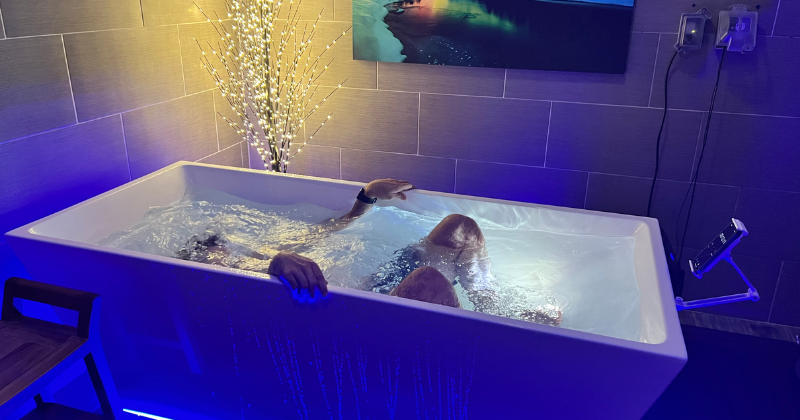
Our cold plunge runs at 45°F — genuinely cold and fully effective. You don't need to go to extremes for results. If you've built acclimatization and enjoy colder water, that's completely fine. But the benefits don't require it.
Duration
In your follicular phase: 1–4 minutes is a solid target once you've built some practice. In the luteal phase: 1–2 minutes, or a cold shower on harder days. As a beginner, start with 30–60 seconds and build from there. The cold shock response passes within the first minute for most people. Once it does, you've already done the work.
Frequency
2–4 sessions per week is a good starting point. Consistency matters far more than duration or intensity. A 90-second plunge three times a week will do more for you than a 5-minute plunge once a week.
Rewarming
Let your body rewarm naturally after you get out — don't immediately jump in a hot shower. The rewarming process is part of where metabolic benefits happen. Move around, wrap in a towel, give yourself 5–10 minutes. Brown fat activation and the neurochemical response continue through the rewarming phase.
A note on pregnancy
If you're pregnant, speak with your doctor before cold plunging. Current evidence does not support cold water immersion as clearly safe during pregnancy for women who haven't already established a practice. This is a conversation for your OB or midwife, not a wellness blog.
Your First Time
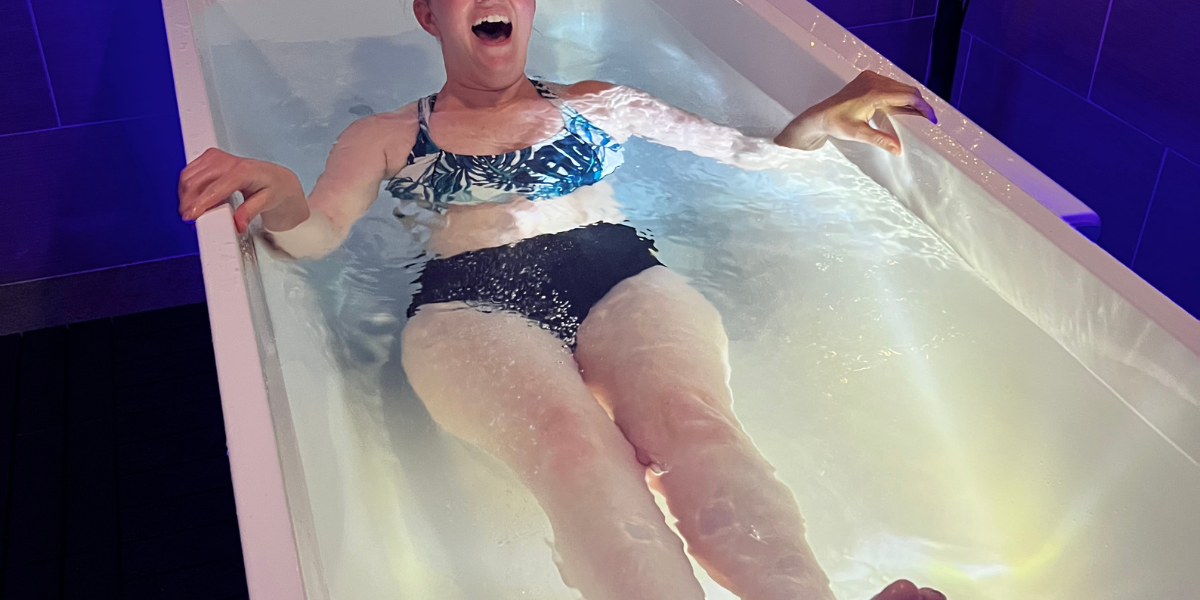
The first 30 seconds are the hardest. The cold shock response kicks in — your breathing sharpens, your heart rate spikes, your instincts tell you to get out. This is completely normal. It's also temporary.
Focus on your exhale. Long, slow, controlled breaths out. The shock response passes within 30–60 seconds for most people. After that, many women describe a shift into something almost meditative — focused but calm. That's the dive reflex activating and your neurochemicals doing their thing.
After you get out: you'll likely feel a combination of energized and settled — clear-headed without being wired. That feeling tends to build and extend with consistent practice. Most women who stick with it for 2–3 weeks describe it as one of the most effective mood and energy tools they've found.
Try it for yourself
Cold plunge at 45°F in a private, heated suite. $25 drop-in or 50% off with any membership at Lost in Float Lincoln NE.
Book a session → See membershipsThe Bottom Line
You don't need warmer water. You don't need a modified protocol because you're a woman. What you need is an understanding of your own physiology — and permission to adjust based on where you are in your cycle without abandoning the practice entirely.
Women defend against cold differently than men — through brown fat and vasoconstriction rather than muscle mass — but the metabolic result is the same. The benefits are real and fully available to you. The cortisol concern dissolves with adaptation. The cycle fluctuations are real, and Dr. Søberg's guidance is refreshingly honest: be gentle with yourself in the luteal phase, figure out what works for you, and keep going.
This is a tool. Used intelligently, it's one of the most powerful ones available.
Lost in Float is located at 8244 Northern Lights Dr, Lincoln NE. Open Tuesday–Sunday 9am–9pm. Our cold plunge is maintained at 45°F in a private, heated suite. Call or text 531.289.7739.