
You've probably tried the productivity apps. The journaling prompts. The seven-minute morning workouts and the sleep hygiene checklists. And you probably know, somewhere in the back of your mind, that none of it is touching the thing that actually needs fixing.
The exhaustion that most working professionals feel isn't from a lack of effort or the wrong morning routine. It's from a nervous system that has been in sympathetic overdrive — fight-or-flight — for so long that it's forgotten how to fully come down. The standard advice addresses the symptoms. It doesn't address the system.
This is about what does.
Why Standard Downtime Doesn't Work
When you're chronically stressed, your body runs elevated cortisol, suppressed parasympathetic activity, and a nervous system that treats every decision, every notification, and every empty moment as a potential threat to manage. This isn't a mindset issue. It's a physiology issue.
The problem with most "recovery" options — Netflix, a glass of wine, scrolling — is that they don't actually shift your nervous system into parasympathetic mode. They distract you from the sympathetic activation without resolving it. You feel temporarily occupied, not actually rested. The next morning the cortisol picks up exactly where it left off.
Your autonomic nervous system has two modes: sympathetic (fight/flight — activated for performance and stress) and parasympathetic (rest/digest — activated for recovery and repair). Most people in demanding jobs spend the majority of their waking hours in sympathetic dominance. Genuine recovery requires a physical input that triggers the parasympathetic shift — not a cognitive decision to relax. Float therapy, heat exposure, and cold exposure all produce this shift through the body, bypassing the mind's resistance entirely.
What actually produces the parasympathetic shift is a body-level input — something that changes the physical state rather than trying to change the mental state. This is why float therapy, sauna, and cold plunge work when meditation apps often don't: they don't ask your mind to settle. They change the environment your body is in until settling becomes the only option.
Your 60-Minute Options at Lost in Float
We're open Tuesday through Sunday, 9am–9pm. Members also get extended access for sauna and Tonal beyond those hours — early morning and late evening — so there's almost always a window that fits. Here are the three most effective options for busy professionals, depending on what you need on a given day.
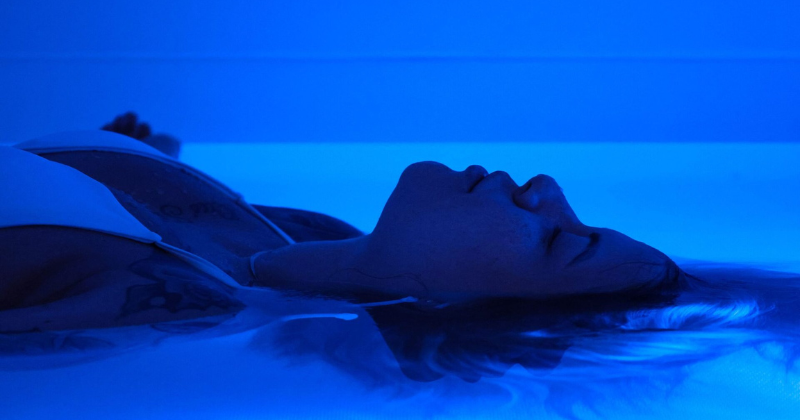
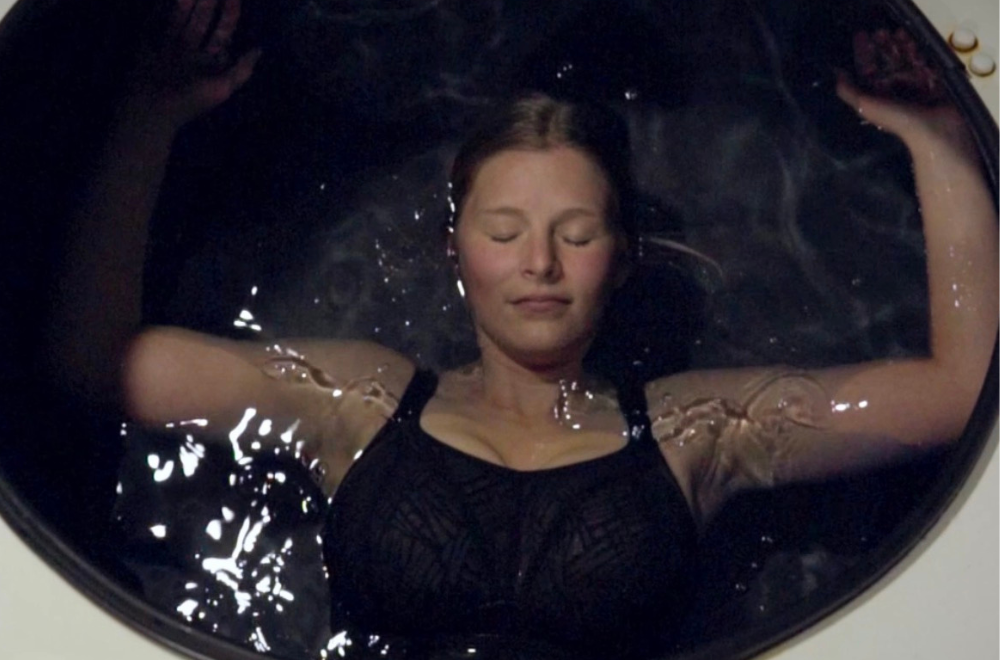
Float therapy — Best for: mental exhaustion, overthinking, anxiety, sleep disruption. The deepest nervous system reset available. 60 minutes is plenty — most people hit the theta state well before the session ends.
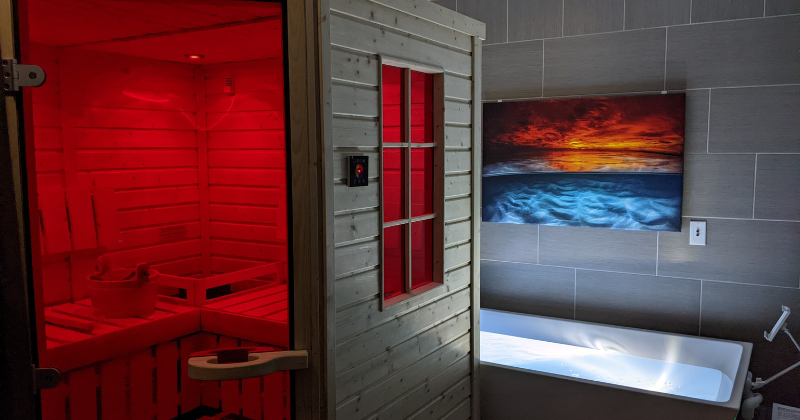
Fire & Ice — Best for: physical tension, afternoon energy crash, cortisol spike from a hard meeting. The sauna + cold plunge combination drops cortisol and spikes endorphins within 60 minutes. You leave feeling genuinely different.
Cryotherapy — Best for: when time is extremely tight. A 3-minute cryo session (15 minutes total with change time) triggers an immediate norepinephrine spike, reduces inflammation, and produces an energy boost that lasts for hours.
Red light + cold plunge — Best for: a mid-week reset when time is tight. Red light supports cellular energy and mood; cold plunge produces a dopamine and norepinephrine surge that improves focus and mood for several hours.
What Happens During a Float for a Busy Mind
If you've never floated before, it's worth knowing what to expect — especially if your mind tends to run fast.
The first ten to fifteen minutes are often the least relaxing. Your brain, accustomed to constant input, will keep working. You'll compose emails. You'll replay the day's meetings. You'll notice every minor physical sensation. This is normal, and it's not a sign that floating isn't working.
"I realized my whole life had turned into a slow crawl. My body has never felt so relaxed and I don't have an urgency to go go go go get everything done."
Around the fifteen to twenty-five minute mark, something changes for most people. The body runs out of tension to hold onto. The mind, receiving no new input, starts to slow on its own. This isn't an act of will — it's what happens when the sensory environment stops demanding a response.
From there, you're in what researchers call a theta state — the brainwave pattern associated with the edge of sleep and deep meditative states. Many people report their clearest thinking happens here: the creative breakthrough, the solution to the problem they couldn't crack at their desk, the moment of genuine quiet that was unavailable anywhere else.
After the session, most people describe emerging as "rebooted." Not just relaxed — actually different. The effect typically persists for several hours and, with regular sessions, begins to shift the baseline.
"Nothing but love for this amazing place. I'm hooked on the floats and really look forward to them. The whole experience has been so positive and mindful that I can't recommend it enough."
What the Experience Looks Like End to End
For someone coming in for a float after work, here's what to expect:
We'll walk you through everything so you go in relaxed, not rushed. Return visitors can arrive 5 minutes ahead. No special prep required either way.
Shower, robe, towels, sandals, earplugs, ear wash, and Vaseline. Shower before you float, then step into the tank.
Music fades out after the first few minutes if you want silence. You control the light. The lid opens at any point.
When you're ready, the post-session lounge has complimentary tea and water. There's no rush to leave — that's by design.
Don't schedule a high-focus meeting immediately after your first float. Give yourself 30 minutes to transition back — the calm tends to linger and it's worth not wasting it.
The Membership Math
A monthly float membership at Lost in Float costs less per session than most Lincoln restaurants charge for dinner for two. For context: it also costs less than the average Lincoln professional spends on coffee in a week.
Every Lost in Float membership includes free daily sauna access and free Tonal strength training — both in private suites. Members also get extended access hours for both sauna and Tonal beyond our standard 9am–9pm schedule, including early morning and late evening on weekdays and weekends — making it genuinely easy to fit a session in before the workday starts or after it ends. If you use the sauna even twice a week on top of your float sessions, the math becomes hard to argue with.
The members who describe the most significant changes in how they manage work stress are, almost without exception, the ones who come consistently — not the ones who float once and wait to see what happens.
We work with Lincoln employers
Lost in Float offers corporate wellness partnerships for Lincoln businesses. Whether you're looking to provide employee wellness benefits, set up team accounts, or explore group session options, we're happy to talk through what makes sense for your organization.
Book your reset
Open Tuesday–Sunday, 9am–9pm. Takes under 5 minutes to book online. No membership required to start.
Book a session → See memberships