New to Tonal? Your First Session, What to Expect & Why It's Worth It
Never used a Tonal before? Whether you're brand new to lifting or you've been training for years and just haven't tried it yet — this is the guide we wish existed. Honest, practical, no fluff.
May 30, 2026
11 min read
By Lost in Float
Lincoln, NE
Tonal smart gym — coming soon to Lost in Float · private suite · 8244 Northern Lights Dr, Lincoln NE · Free with every membership
Whether you've never picked up a weight in your life or you've been training for years and just haven't used a Tonal yet — this guide is for you. Not as a marketing claim. As a mechanical fact about how the machine works and what it does differently from anything else available.
This guide is for anyone new to Tonal — whether that means new to strength training entirely, or new to this specific machine after years in a traditional gym. We're going to cover what Tonal actually is, why electromagnetic resistance is genuinely different from free weights or machines, what your first session looks like step by step, and why it's one of the most effective strength tools available regardless of where you're starting from.
At Lost in Float, Tonal is available in a private suite and is included free with every membership. That means no waiting for equipment, no audience, and no pressure. Just you, the machine, and a coach that adjusts to exactly where you are.
If you read nothing else: Tonal automatically adjusts the weight to match your strength — up or down, rep by rep. You cannot fail a rep and drop weight on yourself. You cannot set the weight wrong. The machine figures it out. That changes everything for beginners.
Why Strength Training — Especially If You've Never Done It
Before we get into what Tonal is, it's worth spending a moment on why strength training matters — whether you're just starting out or you've been lifting for years and want a reminder of what you're actually building. Because the research here is genuinely compelling, and it's not just about aesthetics.
🦴
Bone density — starting at 40
Bone mass declines at roughly 1% per year after age 40. Strength training is one of the only interventions that actively rebuilds bone density — more effectively than walking, swimming, or cardio. The mechanical loading of resistance training sends a direct signal to bone-forming cells to build more bone.
💪
Muscle preservation
Without active resistance training, adults lose 3–8% of muscle mass per decade — and the rate accelerates after 60. Lost muscle means slower metabolism, reduced strength, worse balance, and higher fall risk. Strength training directly counters all of these, at any age.
🔥
Metabolic health
Muscle tissue is metabolically active — it burns more calories at rest than fat tissue. Building even modest amounts of lean muscle meaningfully improves insulin sensitivity, blood sugar regulation, and resting metabolic rate. This effect compounds over years of consistent training.
🧠
Brain & mood
Strength training increases BDNF (brain-derived neurotrophic factor), reduces cortisol, and has documented effects on depression and anxiety comparable to moderate-dose antidepressants in some studies. The mental health case for lifting is as strong as the physical one.
⚖️
Balance & independence
Falls are the leading cause of injury-related death in adults over 65 — and the primary cause of falls is muscle weakness and poor balance. Both are directly trainable through strength work. This isn't just a longevity statistic; it's about maintaining independence and quality of life.
❤️
Cardiovascular health
Resistance training improves blood pressure, reduces LDL cholesterol, and supports cardiac function through mechanisms different from aerobic exercise. The cardiovascular benefits of lifting are distinct from and complementary to those of running or cycling.
Why beginners respond best
Here's one of the most encouraging facts in exercise science: people new to a training stimulus make the fastest gains. The first 8–12 weeks on Tonal — whether you're brand new to lifting or a seasoned lifter adapting to electromagnetic resistance — produce rapid improvements in strength and muscle that come partly from neuromuscular adaptation (your nervous system learning to fire muscle fibers more efficiently for this specific movement pattern) and partly from actual muscle growth. Experienced lifters who switch to Tonal often find the eccentric loading and real-time resistance adjustment challenges muscles in ways their traditional training hadn't — producing a genuine new adaptation stimulus even after years of consistent work.
What Is Tonal — and How Is It Different
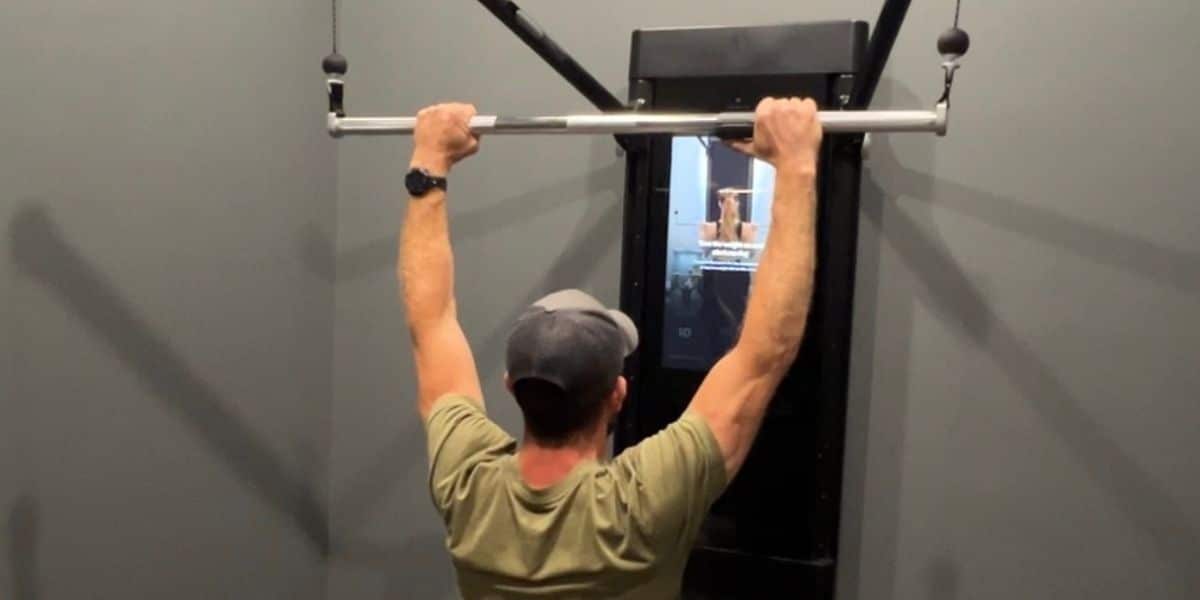
Tonal is a wall-mounted strength training system that uses electromagnetic resistance instead of traditional weights. Two cable arms extend from a central unit containing electromagnetic motors — the resistance is generated by software-controlled magnetic force rather than plates, dumbbells, or pulleys attached to a weight stack.
This sounds technical. What it means practically is significant:
Resistance that adjusts in real time
Traditional weights are fixed — you choose 20 lbs and it stays 20 lbs whether you're on rep 1 or rep 12, whether you're fresh or exhausted. Tonal's resistance changes rep by rep based on how you're actually performing. If you're moving the weight easily, it increases. If you're struggling, it can decrease. The system tracks time under tension, power output, range of motion, and pace to determine the right load in real time. For beginners, this means the machine is constantly calibrated to exactly where you are — not where you were last week, and not where someone else is.
A strength assessment before you start
Before your first real workout, Tonal runs a strength assessment — a short series of movements that establishes your current strength baseline across major movement patterns. From that point forward, every workout starts from an accurate picture of what you can actually do. You're never guessing at weights. The machine knows.
Four weight modes — all relevant to beginners
01
Spotter Mode
As you fatigue toward the end of a set, Tonal senses the slowdown and gradually reduces resistance so you can complete the rep safely. It then restores the full weight for the next rep. This is the equivalent of having a human spotter — except it's always watching, always responds at exactly the right moment, and never lets you fail dangerously. For beginners who worry about form breakdown at the end of sets, this is a significant safety feature.
02
Eccentric Mode
The eccentric portion of a movement is the lowering phase — when the muscle lengthens under tension. Research consistently shows the eccentric phase is where most muscle growth stimulus comes from. Tonal can increase resistance specifically during the lowering phase, making the controlled descent harder than the lift. For beginners, coaches typically don't apply this until a few weeks in — but it's worth understanding because it's one of the features that makes Tonal meaningfully different from a cable machine.
03
Burnout Mode
At the end of a set, Tonal reduces resistance so you can continue past the point where you'd normally stop — extending the set to maximum muscle fatigue in a controlled way. Not a beginner's starting point, but a useful tool once you've built a few weeks of foundation.
04
Chains Mode
Mimics the effect of actual chains on a barbell — resistance increases as you move through the lift's concentric (lifting) phase. Advanced tool for specific training goals. Mention it only because you'll see it referenced in workouts.
AI coaching and form feedback
Tonal's Coach AI tracks your positioning, range of motion, and pacing throughout each movement. If your form deteriorates — say, the bar tilts during a press, suggesting instability — the system provides on-screen feedback and can reduce or cut resistance automatically. For beginners who don't have someone watching their form, this is genuinely meaningful. You're not practicing bad habits in silence; the machine catches them.
"The machine doesn't care what you weighed last month or what your friend lifts. It knows exactly what you can do today, and it works from there. That's a fundamentally different starting point than any gym experience most people have had."
Before You Arrive — Download the Tonal App
One of the best things you can do before your first session is download the Tonal app on your phone. It gives you a head start — you can browse the full program library, get familiar with the interface, and set up your profile before you walk in the door. That means more time lifting and less time figuring things out on the screen during your first session.
Once downloaded, create your profile, browse beginner programs, and get a feel for what your first session will look like — all before you arrive. The app also tracks your Strength Score and workout history so your progress is always with you.
Want to see how easy it is to get started? We've put together a short video walkthrough of the machine, the interface, and what your first session looks like in practice:
Your First Session — Step by Step
Here's exactly what to expect when you use Tonal for the first time at Lost in Float. Nothing here should surprise you.
01
Create your profile
Takes two minutes. You'll enter basic information — your height, weight, and fitness goals. This establishes your initial profile so the AI has a starting point before the strength assessment.
02
The strength assessment
A short series of movements — typically including a squat, row, and press — where Tonal incrementally increases weight to map your actual strength levels. It's not a test you can fail. It's calibration. Takes 10–15 minutes and is the most important thing you do on your first visit because everything after it is based on what it finds.
03
Choose your first workout
The touchscreen offers thousands of trainer-led workouts across every goal and level. For your first session, Tonal will recommend beginner-appropriate programs — typically 20–35 minute full-body sessions. A trainer walks you through each movement on screen, demonstrating setup and form before you begin each exercise.
04
The workout itself
Follow the trainer on screen. The arms adjust to the correct starting position for each exercise. Resistance begins at your assessed level and adjusts rep by rep. Spotter mode is active by default for beginners. The coach gives form cues throughout. You won't be guessing at anything.
05
Your strength score
After your session, Tonal gives you a Strength Score — a composite metric of your overall strength relative to your body weight across all major movement patterns. It updates after every session. Watching it climb over weeks is one of the most motivating aspects of the platform — you have objective proof of progress, not just how you feel.
Who Tonal Is Built For
🌱
Brand new to strength training
Never lifted consistently? The strength assessment starts you at exactly the right weight — not too heavy to be discouraging, not too light to be useless. The AI adjusts from there. You can't "do it wrong" in a way the machine won't catch.
👩
Women who've avoided weights
The private suite removes the intimidation factor entirely. The form coaching removes the "am I doing this right?" anxiety. And the science on strength training for women — bone density, muscle preservation, hormonal health — is some of the most compelling in exercise research.
🕐
People with limited time
An effective Tonal session takes 25–40 minutes. No commute to a gym, no waiting for equipment, no setup time. The efficiency of machine-guided training versus figuring it out yourself is significant — you spend the time lifting, not deciding what to do.
🔄
People returning after a break
Whether it's been months or years, the strength assessment resets to your actual current level. There's no ego-check moment of realizing you can't lift what you used to. The machine doesn't know what you used to lift. It only knows what you can do today.
🏋️
Experienced lifters, new to Tonal
Already comfortable in a gym? The strength assessment resets to your actual current capability, eccentric mode will challenge muscles in ways fixed weights often don't, and the data tracking gives you objective progress metrics most gym setups can't provide. Many experienced lifters find Tonal meaningfully harder than they expected — in a productive way.
🏃
Athletes adding strength work
Runners, cyclists, and endurance athletes who've never prioritized lifting often see dramatic performance improvements from even modest strength training. Tonal's programming includes sport-specific programs and the data tracking makes it easy to add lifting without guessing at how it fits.
🌿
Wellness members building a stack
Tonal pairs exceptionally well with the other services at Lost in Float. Post-Tonal sauna extends the growth hormone window. Cold plunge reduces inflammation. Red light supports cellular recovery. The full recovery stack guide covers this in detail.
A 4-Week Beginner Plan
Here's a realistic starting framework for your first month on Tonal. The machine will adjust weights automatically — this plan is about frequency, session structure, and building the habit before building the strength.
Week 1
2 sessions. Strength assessment + first guided workout. Focus entirely on learning the movements and how the machine responds. Don't push intensity. Goal: get comfortable in the suite and trust the system.
Week 2
2–3 sessions. Follow a beginner full-body program. 25–35 minutes per session. Notice your Strength Score after each session — it will climb noticeably in the first two weeks as your nervous system adapts.
Week 3
3 sessions. Maintain the full-body approach or try a split (upper/lower) if the platform suggests it based on your progress. Add a post-workout sauna session if you want to start building the recovery stack.
Week 4
3 sessions. You are now heat-adapted, pattern-adapted, and have real data on your strength. This is your baseline. Everything from here is measurable progress against a real starting point.
On soreness: Some muscle soreness in the first 1–2 weeks is normal — it's called delayed onset muscle soreness (DOMS) and is a sign your muscles are adapting. It typically peaks 24–48 hours after a session and resolves within 3–4 days. Sauna, cold plunge, and red light therapy all support faster DOMS resolution — another reason the recovery stack matters for beginners specifically.
Tonal is almost here. Get ready.
Private suite. AI coaching. Included free with every Lost in Float membership. Opening very soon at Lost in Float — 8244 Northern Lights Dr, Lincoln NE.
QIs Tonal safe if I've never really lifted before?
Tonal is genuinely one of the safer strength training environments available regardless of experience level. Spotter mode reduces resistance automatically if you're struggling, eliminating the risk of dropping weight or failing a rep dangerously. The AI coach monitors form and provides real-time feedback. The strength assessment ensures you're never starting with more weight than you can handle — whether that's 5 lbs or 150 lbs. That said — always tell the machine the truth during the assessment, and don't try to accelerate the weight progression faster than the system recommends in your first few weeks.
QHow is Tonal different from a regular cable machine at a gym?
Several meaningful ways — and this applies whether you've never set foot in a gym or you've been training for years. First, the resistance adjusts rep by rep rather than being fixed. Second, the AI tracks your performance and adjusts the program based on your actual progress — a cable machine has no idea who you are or how you're doing. Third, modes like Spotter and Eccentric produce training effects that are difficult or risky to replicate with traditional equipment — experienced lifters frequently find eccentric mode challenges them in ways fixed-weight training hasn't. Fourth, the private suite means no waiting, no audience. The data tracking — Strength Score, volume lifted, progress over time — gives you objective metrics most traditional gym setups can't provide.
QHow long does a beginner session take?
Your first session will take 40–55 minutes including the strength assessment (10–15 min) and your first workout (25–35 min). From week two onward, standard sessions run 25–40 minutes. The machine is efficient — you spend the time lifting, not figuring out what to do next or waiting for equipment.
QHow heavy will the weights be? Will I be able to move them?
The strength assessment determines your starting weight. Tonal's resistance goes from as little as a few pounds up to 200 lbs — the system will find the right starting point for you specifically, regardless of your current strength level. It adjusts in 1-pound increments, so there's no jarring jump from "too easy" to "too hard."
QWhen will I start seeing results?
Strength improvements typically become measurable within 2–4 weeks — you'll see it in your Strength Score before you see it in the mirror. Visible body composition changes typically take 8–12 weeks of consistent training, and are meaningfully accelerated by adequate protein intake (roughly 0.7–1g per pound of body weight per day). Energy levels, sleep quality, and mood often improve in the first 2 weeks — these tend to be the first changes people notice.
QIs Tonal appropriate for women who don't want to "bulk up"?
Yes — and the "bulking" concern is worth addressing directly. Building significant muscle mass requires a very specific combination of high training volume, high caloric surplus, and often years of consistent progressive overload. It doesn't happen accidentally. What does happen with regular strength training for most women is a leaner, more defined physique — more muscle, less fat — along with the bone density, metabolic, and hormonal benefits we described earlier. The fear of accidental bulk is one of the most persistent and most unfounded concerns in women's fitness.
QIs Tonal included in my Lost in Float membership?
Yes — Tonal is included free with every Lost in Float membership at all tiers once open. Join the waitlist to be first in line. See all membership options →
QShould I do anything after my Tonal session?
Post-Tonal sauna is one of the most effective recovery pairings available — it extends the growth hormone window and supports muscle repair. Cold plunge after sauna adds the anti-inflammatory and metabolic benefits. If you're a member, sauna is included daily. The full protocol — how to sequence Tonal, sauna, cold plunge, and red light — is covered in our fat loss and recovery stack guide →
Haque I, Schlacht TZ, Skelton DA. (2024). The effects of high velocity resistance training on bone mineral density in older adults: A systematic review. Bone, 179, 116986.
O'Bryan SJ, et al. (2022). Progressive resistance training for concomitant increases in muscle strength and bone mineral density in older adults: A systematic review and meta-analysis. Sports Medicine, 52(8), 1939–1960.
Not medical advice. This guide is informational. If you have a health condition, recent injury, or specific concerns about beginning a strength training program, consult your healthcare provider before starting.
Tell us your #1 goal — pain, sleep, stress, energy, or recovery — and we'll hand you the exact services, in the exact order, to get there fastest. No guessing. No wasted sessions. Just your protocol.