The Science of Sleep: How Sauna, Float, Red Light & HBOT Actually Fix It
Most sleep advice targets behavior. The research on sauna, float therapy, red light, and hyperbaric oxygen targets the biology — and the difference is significant.
Most sleep advice is behavioral: no screens before bed, consistent sleep schedule, cooler bedroom, limit caffeine. This advice is correct — and for most people, insufficient. Not because behavior doesn't matter, but because the physiology driving their poor sleep isn't a behavior problem. It's a cortisol problem, a temperature-regulation problem, a nervous system problem, a hormonal problem. You can't blue-light-filter your way out of a dysregulated HPA axis.
The three most common sleep complaints we hear from members — stress-driven insomnia, menopausal sleep disruption, and chronic wakefulness — all have physiological roots that behavioral interventions only partially address. What sauna, float therapy, red light, and hyperbaric oxygen do differently is work with the biology directly.
Why Sleep Fails: The Three Most Common Patterns
Sauna: The Temperature Signal Your Brain Has Been Waiting For
Sleep onset is triggered by a drop in core body temperature. The brain reads this temperature decline as a signal that it's time to shift into sleep mode — melatonin rises, the REM-promoting systems activate, and the transition from wakefulness to sleep proceeds cleanly. The problem for people with stress-driven insomnia or menopausal disruption is that this temperature drop either doesn't happen reliably or gets interrupted by thermoregulatory misfires.
Sauna works with this mechanism directly. Entering a 195°F sauna raises core body temperature significantly. Exiting — and cooling down over the following 30–90 minutes — produces a rapid, clean temperature drop that the brain reads as an unusually strong sleep-onset signal. The post-sauna temperature decline is steeper and faster than normal daily temperature variation, which is why people consistently report sleeping more deeply on sauna nights than on others.
Research on passive heating before sleep has documented that raising core body temperature modestly before bed — through a warm bath or hot shower — can accelerate sleep onset and support deep (slow-wave) sleep. A 2019 systematic review and meta-analysis of 17 studies on water-based passive heating found that warm baths or showers of 40–42.5°C, scheduled 1–2 hours before bedtime for as little as 10 minutes, were associated with improved sleep quality, better sleep efficiency, and shorter time to fall asleep (on average about 10 minutes faster).
Sauna isn't identical to a warm bath, but it relies on the same heat-then-cool physiology, which is why the optimal timing window — 1–2 hours before your target sleep time — applies here too. For sauna specifically, this means a late evening session is often more valuable for sleep than a morning or midday session.
Float Therapy: The Cortisol Reset
Cortisol is the primary driver of stress-pattern insomnia. It's the alertness hormone — and when it stays elevated into the evening due to chronic stress, the normal nighttime cortisol decline that allows sleep to happen gets compressed or absent. You're physiologically alert at 11pm even when you're exhausted, because your body hasn't received a clear enough deactivation signal.
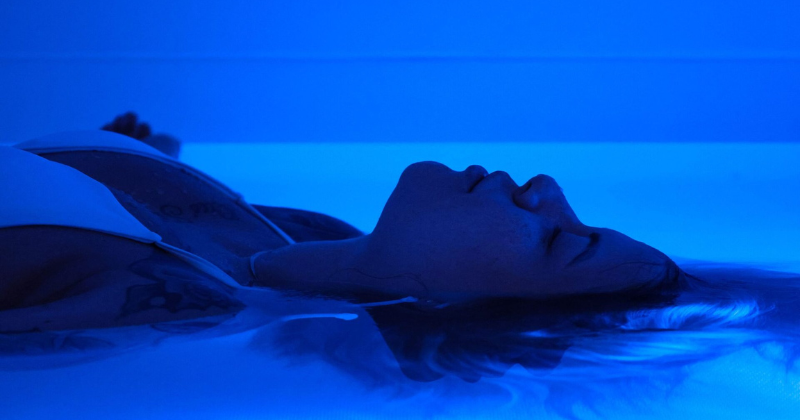
Float therapy produces some of the deepest parasympathetic activation available without pharmacology. The near-complete removal of sensory input lets the nervous system disengage from its alert state — the brain tends to drift into theta brainwave patterns (the borderline between waking and sleep) over the course of a session. The post-float window — the hours after emerging — is characterized by a calm, downregulated nervous system state that many members find directly facilitates sleep onset.
"I can grab an excellent nap in the tank and feel total bliss when I leave. Every single float has left me feeling relaxed and ready to take on whatever is thrown my way."
For members with stress-driven insomnia, the most consistent recommendation is an early evening float — 6–7pm — followed by the normal pre-sleep routine. The calm from the float session tends to carry through the evening, so the nervous system arrives at bedtime already settled rather than struggling to get there.
For people with menopause-driven sleep disruption, the float's deeply calming effect may help with the stress-and-arousal side of the picture that often worsens as estrogen declines. The theta brainwave state also seems to support the kind of deep rest that menopause-disrupted sleep so often lacks — many members describe post-float sleep as the best they've had in years.
Red Light Therapy: Circadian Support and Deep Sleep Architecture
Red and near-infrared light at the wavelengths used in our beds interact with the circadian system through a different pathway than blue light. Blue light suppresses melatonin — it tells the brain it's daytime. Red light does not activate the same photoreceptors; it doesn't suppress melatonin and, in fact, early evidence suggests it may support circadian timing by providing a biological "sunset signal" that prepares the body for sleep.
A 2012 study in the Journal of Athletic Training — one of the most-cited on red light and sleep — found that 14 nights of whole-body red light exposure improved sleep quality scores and serum melatonin levels in a group of 20 elite female basketball players, compared with a placebo group. It's a small, specific study, and the broader research base is still limited — but it points in a consistent direction, and the absence of melatonin suppression with red/NIR wavelengths is well established.
Melatonin production is regulated by light input to the suprachiasmatic nucleus (SCN) through specialized retinal cells called intrinsically photosensitive retinal ganglion cells (ipRGCs). These cells are most sensitive to blue-green light (around 480nm) and much less sensitive to red and near-infrared wavelengths. This means red light therapy — unlike blue light screens — does not suppress the melatonin rise that begins in the evening.
For people using red light therapy in the evening hours, the biological signal is neutral-to-supportive rather than actively disruptive to the sleep preparation process. In theory this makes it one of the few light-based options that shouldn't interfere with sleep when used in the hours before bed — though everyone's different, so it's worth paying attention to how your own sleep responds.
Hyperbaric Oxygen (HBOT): Deep Rest in an Oxygen-Rich Environment
Hyperbaric oxygen therapy is the newest service joining the Lost in Float lineup, and it's a different kind of experience from the others. You rest in a pressurized chamber breathing oxygen-enriched air, while the increased pressure helps your body take up more oxygen than it would at normal atmospheric pressure. The session itself is quiet, still, and enclosed — closer in feel to a float than to a sauna round.
What makes HBOT relevant to a sleep conversation is partly the environment and partly the state it tends to produce. Like float therapy, an HBOT session is a sustained stretch of stillness with very little to do and nowhere to be — conditions that naturally invite the nervous system into a "rest and digest" parasympathetic state.
Many people describe feeling notably calm and settled afterward, and it's common to feel drowsy or even drift off during a session. That post-session calm is the same kind of downregulated state that tends to make winding down toward sleep easier.
Interest in HBOT and sleep is growing. A 2026 analysis from the Sagol Center for Hyperbaric Medicine looked at sleep-quality changes (using the Pittsburgh Sleep Quality Index) among hundreds of patients who completed an extended HBOT protocol, and other studies have examined sleep quality in specific clinical populations.
It's important to be clear about what this means: that research is conducted in clinical settings, with patient populations and structured medical protocols, and it doesn't predict what any individual will experience from wellness sessions. We're not offering HBOT to treat insomnia, sleep apnea, or any sleep disorder. The honest, wellness-appropriate framing is this: HBOT is a calm, oxygen-rich, deeply restful experience, and that kind of nervous-system downregulation is the same lane that helps the rest of our sleep stack work.
Because HBOT is new for us and individual suitability matters, this is a service where a quick conversation before you book is genuinely useful. If sleep is your main reason for trying it, tell us — we'll help you think about where it fits alongside float, sauna, and red light, and whether it makes sense for you at all.
The Sleep Protocol: How to Stack Them
The most effective sequence for sleep — based on member experience and the mechanisms above — tends to look like this:
- Afternoon or early evening (5–7pm): Float therapy — 60-minute session for nervous system downregulation and a calmer evening. The calm tends to carry over for a couple of hours.
- Evening (7–8pm): Sauna — 2 rounds of 15 minutes with a cool-down between. Exit the sauna 1–2 hours before your target sleep time to let the temperature drop line up with sleep onset.
- Any time (including evening): Red light therapy — about 15 minutes, 3–4x per week. Evening use generally shouldn't affect sleep onset — though everyone's different, so see how your own body responds. Supports melatonin signaling and deep sleep architecture with regular use.
- Daytime or early evening: HBOT — a calm, restful session in an oxygen-rich environment. Many members find it leaves them deeply settled, which can make winding down easier later. A good standalone "reset" on a non-sauna day.
Not everyone has time for all of these on the same day — and you don't need to. Each works independently. The float settles the nervous system, the sauna delivers the temperature signal, the red light supports the circadian architecture, and HBOT adds a deeply restful reset. Mix and match to what your week allows.
The Menopause Sleep Problem Specifically
Menopause sleep disruption deserves its own mention because the mechanism is distinct. Declining estrogen and progesterone can disrupt sleep through several channels at once: hot flashes that wake you at 3am, the loss of progesterone's calming, sleep-promoting effects, shifts in HPA axis reactivity, and the secondary sleep deprivation that compounds from weeks and months of fragmented nights.
The sauna-then-cold-plunge sequence is especially worth exploring here. Regular heat exposure gives the body repeated practice at thermoregulation — the same system involved in hot flashes — and some research suggests consistent contrast therapy may be associated with fewer and less intense vasomotor symptoms over weeks of practice. Many women find that as their temperature regulation feels steadier, their nights feel steadier too.
Float therapy offers a deep parasympathetic reset for the stress-and-arousal side that often intensifies in this season. Red light supports skin and tissue changes that come with menopause while also supporting sleep architecture. Read the full menopause protocol →
Sleep better. Starting this week.
Sauna, float therapy, red light, and HBOT — all under one roof in Lincoln. Open Tue–Sun 9am–9pm. Extended member hours for sauna.
Book a session → See membershipsFAQ
Note: This post is educational and based on published research. Our services — including HBOT — are offered for wellness and relaxation, not to diagnose or treat any medical condition. If you are managing a diagnosed sleep disorder or are on sleep medications, discuss any wellness changes with your provider before starting.