HBOT in Lincoln NE: Everything You Need to Know
What hyperbaric oxygen therapy actually is, what the research shows at wellness pressure levels, what to expect in a session, and how it fits your recovery routine — in a reclining chair, not a pod.
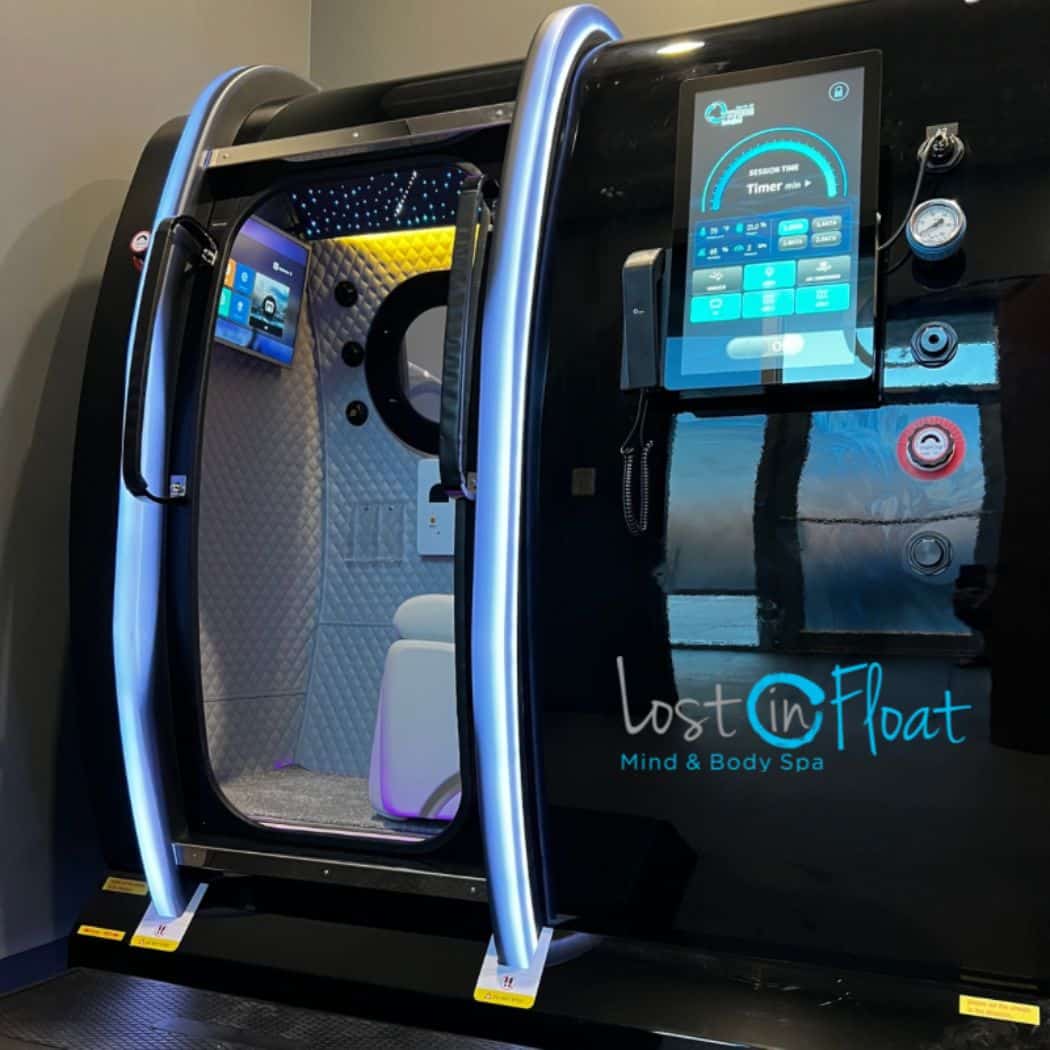
Hyperbaric oxygen therapy has a reputation for being intimidating — claustrophobic pods, hospital settings, high-pressure chambers reserved for wound care or decompression sickness. The experience at Lost in Float is none of those things.
You sit in a comfortable reclining chair in an air-conditioned chamber — not hot, not claustrophobic. Watch TV, rest, or fall asleep. Breathe oxygen through a mask and let the pressurized environment do its work. Sixty minutes later, you're done. The setup is specifically designed around comfort — because a relaxed body is more receptive to the benefits of increased oxygenation than a tense one.
Before we get into what it's like here, it's worth understanding what HBOT actually is, what the research says at wellness pressure levels, and what you can honestly expect.
A note before we start: HBOT research spans a wide range of pressures and clinical protocols. Much of the strongest published evidence refers to higher-pressure medical HBOT used in hospital settings for specific diagnosed conditions. At Lost in Float, we offer a wellness-focused HBOT experience — for general wellness, recovery, and self-optimization. We are a wellness center, not a medical provider. If you have any health conditions or are taking medications, you will need to get clearance from your healthcare provider before starting.
What Is HBOT?
Hyperbaric oxygen therapy involves breathing oxygen inside a gently pressurized chamber. The increased atmospheric pressure allows your lungs to absorb more oxygen than would be possible at normal air pressure. That oxygen-enriched blood then travels throughout the body — reaching tissues, joints, and organs more effectively than at baseline.
Normal atmospheric pressure at sea level is 1 ATA (atmosphere absolute). HBOT operates above that. At Lost in Float, we offer wellness HBOT from 1.3 to 2.0 ATA using 95–97% concentrated oxygen — everyone starts at 1.3 ATA and progresses based on their individual response. Clinical medical HBOT typically operates at 2.0 ATA and above with 100% physician-prescribed medical-grade oxygen. For a detailed breakdown of what these pressure levels mean and how they differ, read our guide to HBOT pressure levels →
| Mild / Wellness HBOT | Clinical Medical HBOT | |
|---|---|---|
| Pressure | 1.3–2.0 ATA (Lost in Float range) | 2.0+ ATA with 100% medical-grade oxygen |
| Setting | Wellness centers, recovery facilities | Hospitals, accredited medical hyperbaric units |
| Oxygen delivery | 95–97% concentrated oxygen via mask | 100% physician-prescribed medical-grade oxygen |
| Typical use | Recovery, wellness, performance, brain & cognitive function, anti-aging & longevity | Wound healing, decompression sickness, CO poisoning — approved clinical indications |
| Side effect risk | Low — ear equalization most common; well-tolerated by most healthy adults | Higher — oxygen toxicity risk increases above 2.0 ATA with 100% oxygen |
| Prescription required | No | Yes — physician prescription and oversight required |
A common question: if higher pressure delivers more oxygen, isn't it always better? Not necessarily. Research at mild wellness pressures has documented meaningful anti-inflammatory effects, support for cellular energy production, and mitochondrial support — genuine wellness benefits that don't require clinical pressure levels to achieve. Dr. Jason Sonners' comparative research found that 1.3 ATA and 2.0 ATA each affect different sets of cytokine pathways, meaning they're complementary rather than simply one being a stronger dose of the other. Read the full pressure comparison →
Everyone at Lost in Float starts at 1.3 ATA. It takes time for the body to adapt to pressurization — and that adaptation process is itself part of what makes HBOT effective. 2.0 ATA becomes available as your body adjusts and based on your individual response and goals.
How It Works — The Mechanisms
The core mechanism is straightforward: under increased atmospheric pressure, more oxygen dissolves directly into blood plasma — not just into red blood cells. This is governed by Henry's Law of Gases. The result is that oxygen reaches tissues through a different route than normal, potentially accessing areas where blood flow or red blood cell delivery is limited.
Beyond simple oxygenation, research has explored several additional mechanisms at various pressure levels:
- Enhanced tissue oxygenation: Plasma-dissolved oxygen can reach hypoxic (low-oxygen) tissue that red blood cells may struggle to access — particularly in areas of inflammation, injury, or reduced circulation.
- Inflammation modulation: Research at 1.3 ATA has documented reductions in pro-inflammatory cytokines including interleukin-6 (IL-6) and tumor necrosis factor-alpha (TNF-α) — markers associated with chronic inflammation, fatigue, and impaired recovery.
- Mitochondrial function: Increased oxygen availability supports ATP production — the energy currency of cells. This is particularly relevant for cognitive function and muscle recovery, both of which are highly oxygen-dependent.
- Immune modulation: Some mild HBOT research has documented effects on natural killer (NK) cell activity and broader immune function, suggesting a role in immune system support.
- Stem cell mobilization: Research documents stem cell mobilization at both mild and higher wellness pressures — approximately 3× at 1.3 ATA and approximately 8× at 2.0 ATA per Sonners’ comparative research. Both levels support tissue repair and recovery, with the degree of mobilization scaling with pressure.
What the Research Shows at Wellness Pressure Levels
It's important to be honest about where the evidence is strong and where it's still developing — particularly at the lower pressure range used in wellness settings.
What the research supports at mild pressures
Studies at wellness pressures (approximately 1.3–1.5 ATA) show consistent findings in several areas. Research has documented improved recovery from physical exertion, reduced perceived fatigue, and lower circulating inflammatory markers in people receiving regular mild HBOT sessions. A study involving rugby players found those using mild hyperbaric chambers post-exercise showed faster reductions in creatine kinase levels (a measure of muscle damage) and lower soreness scores compared to controls.
Systematic reviews of HBOT and cognitive function — including a comprehensive 2022 review in Neuropsychology Review — document improvements in memory, executive function, information processing speed, and global cognitive scores across multiple studies, primarily at 1.5–2.0 ATA with 100% oxygen. At wellness pressure levels with oxygen delivered via mask, the oxygenation delivered is lower than these clinical protocols — but the directional findings are consistent.
Emerging research has also explored HBOT's role in supporting recovery from post-viral fatigue — including brain fog, persistent low energy, and reduced exercise tolerance. This area is newer and actively developing. Results vary by individual and consistency of use.
Where to set realistic expectations
The research on wellness HBOT is actively growing — and some of the most compelling recent findings come from Dr. Jason Sonners' direct comparison of 1.3 and 2.0 ATA in healthy individuals, and the landmark Israeli telomere research at 2.0 ATA. That said, much of the strongest published evidence still comes from higher-pressure clinical settings with 100% oxygen — and results vary meaningfully by individual, pressure level, session frequency, and what outcomes are being measured. HBOT is a wellness tool that works best as part of a consistent broader routine. It is not a cure and not a substitute for medical care. Read our full breakdown of the research by pressure level →
What to Expect at Lost in Float
Most people's mental image of HBOT involves lying flat inside a narrow tube. Our setup is genuinely different — and that difference matters for both comfort and effectiveness.
Day of: Hydrate well, but use the restroom before entering the chamber. Eat a light meal beforehand — avoid anything heavy, and skip alcohol and limit caffeine. Arrive 15 minutes early for your first visit.
What to wear: Comfortable, loose cotton or natural fiber clothing — no heavy lotions, hairspray, or strongly scented products. Organic makeup is fine. Leave shoes outside the chamber. Jewelry is fine to wear.
Safety, Comfort & What to Know
At wellness pressure levels, HBOT has a strong safety profile. Understanding the full picture builds appropriate expectations.
Common and mild: Ear or sinus pressure during pressurization (like flying — equalizes easily by swallowing or yawning). Temporary mild fatigue or lightheadedness after the first session or two as your body adjusts. Dry mouth or nose from the oxygen delivery.
Less common: Temporary vision changes — a mild shift toward nearsightedness (myopia) that can develop over multiple sessions. This is well-documented and in the vast majority of cases fully resolves within days to weeks after sessions end. It happens because increased oxygen affects the crystalline lens of the eye. Important nuance: HBOT does not cause cataracts. However, if you have an early cataract already forming, HBOT may accelerate its maturation rate slightly. If you've already had cataract surgery (meaning your natural lens has been replaced), this does not apply to you. Headache in some first-timers, typically from not equalizing ear pressure adequately.
Rare at wellness pressures: Barotrauma (pressure injury to ears or sinuses) is rare but possible if equalization is not done properly — staff guidance on your first session significantly reduces this risk. Oxygen toxicity is a real concern at high clinical pressures with 100% oxygen — the risk profile at wellness pressure levels is substantially lower than clinical protocols, and is managed through appropriate pressure selection and session duration.
One important breathing reminder: Always breathe normally throughout your session. If you hold your breath during pressurization or depressurization, air in the lungs continues to expand as pressure changes — which in rare cases can cause a pneumothorax (lung overpressure injury). This is extremely rare and entirely avoidable: simply keep breathing normally.
Seizure history: A history of seizures is not an automatic contraindication, but does require provider approval and lower pressure sessions. Notably, research has shown that people with seizure disorders who use HBOT appropriately often see a decrease in both the frequency and intensity of seizure activity — but this must be managed in coordination with your neurologist or treating provider. Do not begin HBOT with a seizure history without discussing it with your doctor first.
Consult your doctor before using HBOT if you have: an untreated pneumothorax (collapsed lung), active ear or sinus infection, recent ear surgery, certain lung conditions (emphysema with CO2 retention), a history of spontaneous pneumothorax, uncontrolled high fever, or are pregnant. People with claustrophobia should discuss the seated chamber setup with us before booking — many find it significantly more accessible than they expect, but it's worth having the conversation. If you are on any medication, particularly those affecting oxygen sensitivity, check with your prescribing provider.
At our wellness pressure levels in a comfortable seated setup, the vast majority of people tolerate HBOT easily and well. Our staff walk every first-timer through equalization and monitor throughout the session.
Who It's For
How HBOT Fits Your Wellness Routine
HBOT works well as a standalone practice. It compounds meaningfully when paired with the other services at Lost in Float — each addressing different but complementary aspects of recovery and performance.
- Float therapy — Float addresses nervous system regulation and gravitational decompression; HBOT adds enhanced oxygenation. Together they cover both the relaxation-recovery axis and the cellular energy axis. Many members pair them on the same visit or alternate days.
- Red light therapy — Red light stimulates mitochondrial ATP production through photobiomodulation; HBOT delivers more oxygen to fuel that production. The two work on the same cellular energy system through different inputs. Read the red light guide →
- Sauna — Heat exposure and HBOT both drive inflammation modulation and circulatory response, through completely different mechanisms. Sauna on one day, HBOT on another is a practical pairing for members focused on inflammation management.
- Cold plunge — Cold reduces inflammatory markers through vasoconstriction; HBOT addresses the oxygenation side of the same recovery equation. Together they address recovery from multiple angles simultaneously.
The Lost in Float Recovery Stack brings all of these together — HBOT is now part of that full stack — Gold and Platinum members can use membership credits toward HBOT. Bronze and Silver members receive 50% off every session. See membership options →
Honest Expectations
HBOT is not a cure and not a substitute for medical care, sleep, nutrition, or movement. At wellness pressure levels, it's a tool that supports the body's natural recovery and optimization processes — most effectively when used consistently as part of a broader routine.
Some people notice subtle clarity or energy after their first session. Others feel nothing unusual at first and notice cumulative effects building over weeks of regular use. Both experiences are normal. Individual results vary based on your baseline, what you're using it for, how consistently you come, and how it integrates with the rest of your routine.
When do meaningful benefits appear? Most people begin to notice real, sustained benefits somewhere between 25 and 50 hours of total HBOT time. At 60 minutes per session, that's 25–50 sessions. The most effective way to reach that threshold is 3–5 sessions per week. This isn't a number we've invented; it's the frequency used in the clinical studies that documented the strongest outcomes, and what practitioners like Dr. Jason Sonners of HBOT USA consistently point to for meaningful adaptation. Don't judge the therapy by session three.
A Lost in Float membership makes this frequency financially practical. Gold and Platinum members can use their membership credits toward HBOT sessions. Bronze and Silver members receive 50% off every HBOT session. The math matters: getting to 25–50 hours at drop-in pricing is expensive. A membership is how this becomes a sustainable practice.
Experience HBOT in Lincoln
Hard-shell seated chamber · 1.3 to 2.0 ATA · 95–97% oxygen · 60-minute sessions · Gold & Platinum: use membership credits · Bronze & Silver: 50% off every session.
See membership tiers → Book another serviceFrequently Asked Questions
A note on medical care: The information in this post is educational and based on published research. HBOT at Lost in Float is a wellness service, not a medical treatment. It is not a replacement for professional medical care. If you are managing a health condition, please continue working with your healthcare provider. HBOT may complement that care — it is not a substitute for it.