The wellness industry has done red light therapy a disservice.
Between the $30 face masks on Amazon and the extravagant claims plastered across social media, it's become genuinely hard to separate what red light therapy actually does from what people wish it did. Walk into any wellness center, and you'll hear the same buzzwords — collagen, ATP, photobiomodulation — without any real explanation of what makes one device work and another one essentially useless.
"Effectiveness depends far more on specific technical specifications than on marketing claims, LED counts, or the price tag on the machine."
Here's the truth: red light therapy is one of the most well-researched and genuinely effective modalities in modern wellness. But only when the equipment is right. This is the guide we wish every patient read before their first session.
Wavelengths: The Foundation of Everything
Therapeutic outcomes in red light therapy come from precise wavelengths of light penetrating different tissue depths and triggering specific cellular responses. Different wavelengths primarily target different depths and cellular responses — with some overlap — and a device missing key wavelengths is leaving enormous benefit on the table.
Here's what each wavelength range actually does:
Research shows red and NIR wavelength combinations often outperform single-wavelength devices for collagen density and pain reduction — though high irradiance at key peaks can also outperform diluted multi-wavelength setups. Both spectrum breadth and delivery intensity matter.
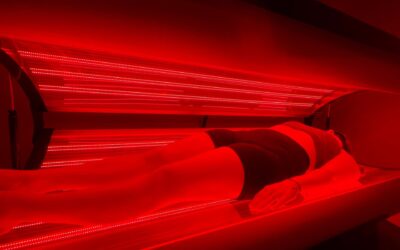
Systems offering a multi-wavelength spectrum provide far greater versatility — addressing surface skin concerns and deeper musculoskeletal issues simultaneously. Devices limited to 2-4 wavelengths offer narrower benefits and may require multiple devices or many more sessions to approach the same outcomes. Our bed at Lost in Float offers 10 targeted wavelengths, delivering 3-9 of them in a single session depending on what you're trying to target.
The near-infrared range deserves special attention. Most people know that red light helps skin. Fewer know that NIR wavelengths — particularly 850nm and 980nm — penetrate deep enough to affect muscle tissue, joint health, and even neurological function. Read our full breakdown of 980nm vs 850nm here →
Irradiance: The Number That Actually Matters
Here's where most people get misled. LED count means almost nothing. Advertised wattage means very little. The number that determines whether your session is therapeutic or a waste of time is irradiance — the amount of light energy actually delivered to your skin surface, measured in milliwatts per square centimeter (mW/cm²).
The catch? Many devices that claim 100-200+ mW/cm² are measuring directly at the LED surface — not at your skin. Once you account for the acrylic cover, your body's distance from the LEDs, beam spread, and reflection loss, the real-world delivery is frequently 10-20 mW/cm² or lower. Independent testing has confirmed this repeatedly. It's also worth noting that optimal irradiance varies by target tissue and individual factors — deeper tissue targets generally benefit from higher fluence, while surface skin applications are more sensitive to dose.
What does that mean practically? Sessions on underpowered equipment often produce minimal or inconsistent benefits. In many cases, you're essentially spending 20 minutes under a warm light with little more biological effect than resting.
Red light therapy follows what's known as the Arndt-Schulz law (biphasic dose response): too little light does nothing meaningful, while too much can actually suppress the benefits you're after. This is why the total energy delivered to tissue — fluence, measured in J/cm² — matters as much as irradiance alone. Session time and irradiance combine to determine fluence. Professional systems calibrate this carefully, targeting 5–20 J/cm² depending on the goal. At Lost in Float, our protocols are built around this framework — matching wavelengths, irradiance, and session time to what you're actually trying to achieve.
Third-party lab verification measured at the actual treatment surface is the only reliable indicator of performance. Always seek publicly available, independent irradiance reports rather than relying on manufacturer specifications. Also prioritize even coverage with no hot spots, low EMF output if you're sensitive, and protocols tailored to specific goals rather than a generic one-size setting. At Lost in Float, our bed is verified with independent testing to ensure consistent delivery in the optimal therapeutic range.
How companies inflate their numbers
Irradiance (measured in mW/cm²) tells you how much real therapeutic light actually reaches your skin. It's the most important spec for getting results — and the one most companies misrepresent. Common tricks include:
- Testing right at the surface (0 inches away) instead of a normal treatment distance like 6–12 inches. Output drops dramatically as you move further from the LEDs.
- Using the wrong tool, such as a cheap solar power meter, which can overstate the reading by 40–70% because it picks up heat and non-therapeutic light alongside actual red light output.
- Only showing the brightest single spot instead of the average across the whole panel. What matters is consistent delivery across the full treatment surface.
- Testing the device when it's still cold — LED output often drops after the unit warms up to operating temperature, so specs taken at startup can be meaningfully higher than real-world delivery.
How the Best Systems Compare
| Feature | High-Performing Systems | Basic / Limited Systems |
|---|---|---|
| Wavelength range | 8–12+ targeted wavelengths covering blue, green/amber, multiple red peaks, and extended NIR | Typically 2–4 wavelengths (single red ~660nm + NIR ~850nm) |
| Advertised irradiance | Moderate, realistic figures aligned with real-world delivery | Often dramatically high claims (100–200+ mW/cm²) |
| Verified irradiance at skin | Consistently 20–40 mW/cm² with published lab reports | Frequently 10–20 mW/cm² or lower in independent testing |
| Primary applications | Skin health, anti-aging, acne, pain relief, weight loss, deep recovery, athletic performance | Basic recovery or relaxation; limited skin benefits |
| Session experience | Cool, uniform full-body coverage; customizable protocols | Uneven exposure, localized heat, inconsistent results |
| Transparency | Independent lab reports publicly available | In-house or unverified claims only |
Getting the Most From Your Sessions
Even the best equipment only works if you use it well. A few things that make a real difference:
- Consistency beats intensity. Three to five sessions per week yields better cumulative results than occasional long sessions. Your cells respond to regular signaling — not sporadic bursts.
- Distance and time matter. Follow your provider's guidelines on session length. Moving closer to the bed doesn't always help — it can push you past the therapeutic window into overstimulation.
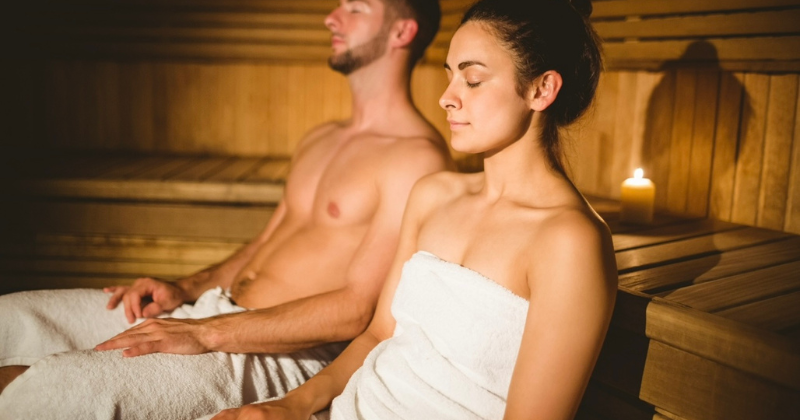
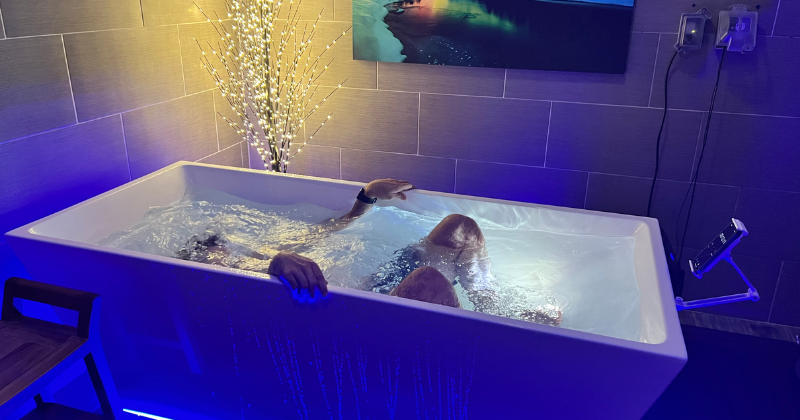
- Stack it with other modalities. Combining red light with sauna or cold plunge produces compounding effects. Many of our members use red light as a recovery anchor in their broader wellness routine.
- Hydration and nutrition support results. Well-hydrated cells respond better to photobiomodulation. Don't skip the basics.
- Generally very safe — but consult your doctor if you have photosensitivity, are on photosensitizing medications, or have specific health conditions.
What This Means For Your Sessions in Lincoln NE
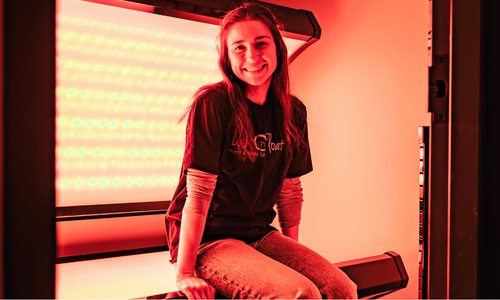
At Lost in Float, we didn't cut corners on equipment. Our clinic-grade full-body bed offers 10 targeted wavelengths, with sessions configurable based on what you're trying to achieve. We've built specific protocols for pain relief, fat loss, skin rejuvenation, general wellness, athletic performance, and acne — so the wavelengths your body gets are matched to your actual goal.
The results speak for themselves. Members notice changes in their skin, their recovery times, their pain levels, and their body composition far sooner than they expect — because the right wavelengths, at the right intensity, targeted to the right goal, actually work.
Experience the difference for yourself
Book a red light session at Lost in Float in Lincoln NE — clinic-grade bed, private suite, immaculate environment.
Book a red light session → See membershipsThe Bottom Line
When evaluating any red light therapy provider or device, look beyond the marketing. The most effective systems share three characteristics: a broad clinically relevant wavelength portfolio, third-party verified irradiance in the 20-40 mW/cm² range at skin surface, and alignment with your specific goals.
Systems meeting these criteria consistently deliver noticeable, evidence-supported outcomes. Everything else is a light show.
Lost in Float | 8244 Northern Lights Dr, Lincoln NE | Open Tuesday–Sunday 9am–9pm | 531.289.7739
1. Hamblin MR. Proposed Mechanisms of Photobiomodulation or Low-Level Light Therapy. Dose-Response. 2017. View study →
2. Huang YY, et al. Biphasic Dose Response in Low Level Light Therapy. Dose-Response. 2011. View study →
3. Lanzafame RJ, et al. Reciprocity of exposure time and irradiance on energy density during photoradiation on wound healing. Lasers Surg Med. 2007. View study →
4. Wunsch A, Matuschka K. A controlled trial to determine the efficacy of red and near-infrared light treatment in patient satisfaction, reduction of fine lines, wrinkles, skin roughness, and intradermal collagen density increase. Photomed Laser Surg. 2014. View study →
5. Avci P, et al. Low-level laser (light) therapy (LLLT) in skin: stimulating, healing, restoring. Semin Cutan Med Surg. 2013. View study →