
The Finnish Secret: What 20 Years of Sauna Research Actually Tells Us
A single study followed over 2,000 Finnish men for two decades and produced some of the most striking longevity data in all of wellness research. Here's what it actually found — and why it matters for you.
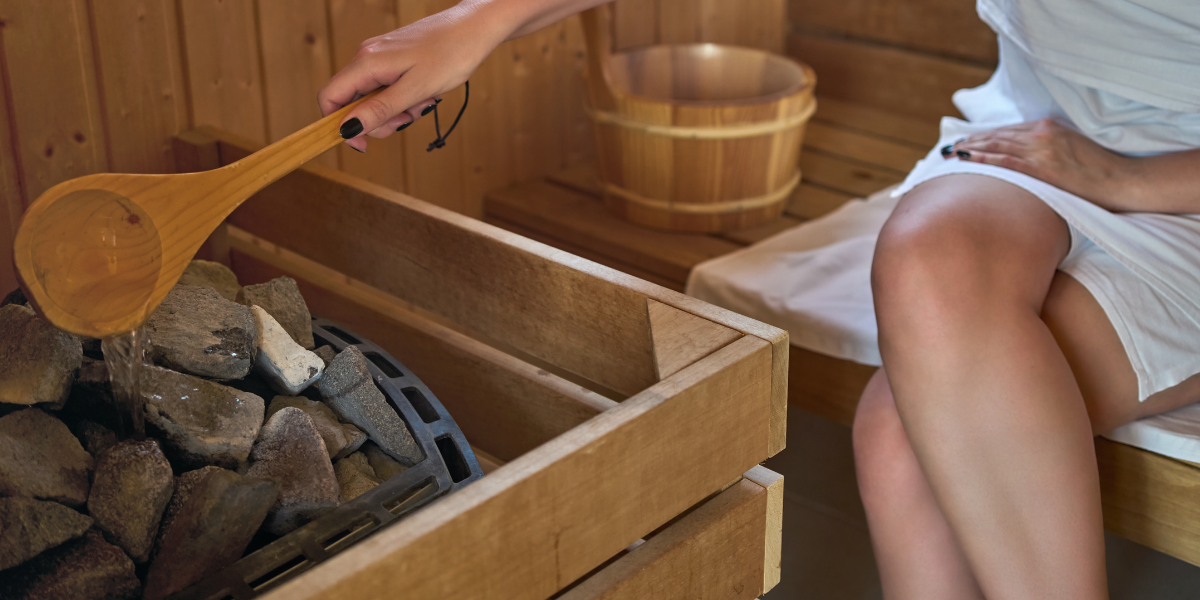
In 1984, a group of Finnish researchers began following 2,315 middle-aged men from eastern Finland. They tracked their health, their habits, and — crucially — how often they used the sauna.
They kept following them for over 20 years.
What came out of that study — the Kuopio Ischemic Heart Disease Risk Factor Study, or KIHD — is still one of the most remarkable bodies of wellness research ever published. Not because the findings were subtle. But because they weren't.
"Men who used the sauna 4-7 times per week had a 50% lower risk of dying from cardiovascular disease compared to men who sauna'd just once a week. That's not a rounding error. That's the kind of number that makes cardiologists do a double-take."
And the cardiovascular data was just the beginning.
The Study Itself: What Was Actually Measured
Before we get into the findings, it's worth understanding what made this research so credible. The KIHD study wasn't a short-term lab experiment. It followed real people, over real decades, tracking real outcomes: heart attacks, strokes, dementia diagnoses, and all-cause mortality. The lead researcher, Dr. Jari Laukkanen, and his team at the University of Eastern Finland have since published dozens of papers from this dataset — all pointing in the same direction.
Name: Kuopio Ischemic Heart Disease Risk Factor Study (KIHD)
Subjects: 2,315 middle-aged Finnish men
Follow-up period: 20+ years
Lead researcher: Dr. Jari Laukkanen, University of Eastern Finland
Sauna type: Traditional Finnish sauna at 174–210°F (79–99°C)
Session length: Approximately 15–20 minutes per session
The participants were divided into three groups based on how often they sauna'd: once per week, 2-3 times per week, and 4-7 times per week. The differences between those groups — in terms of health outcomes — were not small.
The Numbers That Changed Everything
Here are the headline findings from the KIHD dataset and follow-on research by the same team. These are the numbers that put sauna research on the map.
It's worth pausing here for a moment. A 61% reduction in stroke risk. A 65% reduction in Alzheimer's risk. A 50% reduction in cardiovascular mortality. These numbers are larger than the effects seen from most pharmaceutical interventions studied over the same time period.
And the intervention is: sit in a hot room a few times a week.
Why Does It Work? The Mechanisms
Good researchers don't just report associations — they ask why. And in the case of sauna, the mechanisms are actually well understood. This isn't a mystery. Here's what's happening in your body when you sit in 195°F heat.
Does Dose Actually Matter?
The short answer: yes, significantly. The KIHD data showed a clear dose-response relationship — the more frequently people sauna'd, the better their outcomes. But there were also meaningful differences within session parameters.
Frequency
The biggest jump in benefit came from going from once per week to 2-3 times per week. Going from 2-3 to 4-7 times per week produced further improvement, but the initial frequency increase matters most. If you're doing nothing, getting to twice a week is the most important first step.
Duration
The Finnish men in the study typically spent 15-20 minutes per session. Research suggests that sessions under 10 minutes produce less robust heat shock protein activation. Aim for at least 15 minutes, with 20-30 minutes being the sweet spot for most people.
Temperature
This matters more than most people realize. The KIHD study used traditional Finnish saunas running at 174-210°F. Infrared saunas, which typically operate at 120-140°F, have a much weaker evidence base. The physiological mechanisms — HSP activation, cardiovascular stress, core temperature elevation — require genuinely high heat. Mild warmth doesn't cut it.
Every major longevity study on sauna — the KIHD data, the stroke research, the dementia findings — was conducted on traditional Finnish saunas at temperatures between 174°F and 210°F. At Lost in Float, we use a traditional Finnish sauna maintained at 195°F. This isn't a preference. It's what the research has actually measured. Infrared saunas have a smaller, less consistent body of evidence and operate at temperatures too low to reliably trigger the mechanisms described above.
The Honest Caveats
Good science requires honesty. Here's what the Finnish data doesn't prove:
- It's observational, not interventional. The KIHD study followed people who chose to sauna — it didn't randomly assign people to sauna groups. That means we can't rule out confounding factors entirely. People who sauna frequently in Finland may also differ in other lifestyle ways.
- The participants were middle-aged Finnish men. The findings may not apply identically to women, younger populations, or people of different ethnic backgrounds. That said, the physiological mechanisms are universal.
- Sauna is not a substitute for exercise, diet, or sleep. The risk reductions observed are associations — not guarantees. Sauna appears to be powerfully complementary to healthy lifestyle habits, not a replacement for them.
That said — the magnitude of the associations, the consistency across decades and multiple published papers, and the clear biological mechanisms make this among the most credible bodies of observational wellness research available. When effects this large are this consistent, they're worth taking seriously.
"The consistency and magnitude of the sauna findings across 20+ years of data is unlike almost anything else in lifestyle medicine. We're not talking about a 5% improvement. We're talking about halving your risk of dying from your most likely cause of death."
What This Means for You, Practically
If the Finnish data is correct — and the balance of evidence suggests it largely is — here's what optimal sauna use looks like:
- Frequency: Aim for at least 2-3 sessions per week. 4+ sessions per week is where the most significant risk reductions appear.
- Duration: 15-20 minutes minimum per session. 30 minutes is the sweet spot for most people.
- Temperature: Traditional Finnish sauna at 175°F or above. Not infrared.
- Hydration: Drink water before and after. Consider electrolytes if you're doing longer or back-to-back sessions.
- Stacking: Sauna pairs extremely well with cold plunge (contrast therapy), which adds its own independent benefits to the stack.
At Lost in Float, our traditional Finnish sauna runs at 195°F and is available as a $13 drop-in or completely free with any membership tier — up to two sessions per day. We built it this way deliberately: the research is clear that frequency matters, and making it easy and affordable to show up regularly is how you actually get the benefits.
Start building the habit
Traditional Finnish sauna at 195°F. $13 drop-in or free with any membership — up to 2x per day.
Book a session → See membershipsThe Bottom Line
The Finnish research on sauna is not hype. It is 20+ years of rigorous observational data, confirmed across dozens of published papers, with clear biological mechanisms to explain every major finding.
The associations are large. The dose-response is real. The mechanisms are understood. And the intervention is one of the most accessible, affordable, and pleasant things you can do for your long-term health.
Finland has one of the highest per-capita rates of sauna use in the world. They also have among the lowest rates of cardiovascular disease in Europe. That's probably not a coincidence.
Lost in Float is located at 8244 Northern Lights Dr, Lincoln NE. Open Tuesday–Sunday 9am–9pm. Call or text 531.289.7739.