Most people approach wellness like a buffet — they try a little of everything and wonder why nothing sticks.
The members at Lost in Float who get the most dramatic results do something different. They stack.
They use multiple modalities in a deliberate sequence, each one amplifying the next, creating a compounding effect that none of them could produce alone. We call it the Recovery Stack — and the science behind it is as compelling as the results.
Why Stacking Works
Your body doesn't respond to single interventions the way it responds to combined ones. This is known as synergistic effect — where the combined outcome exceeds the sum of the individual parts.
Think of it this way: a cold plunge alone reduces inflammation. A sauna alone increases growth hormone. But alternating between the two — contrast therapy — produces cardiovascular adaptations and hormonal responses that neither produces in isolation. The Lost in Float Recovery Stack takes this principle and extends it across five modalities.
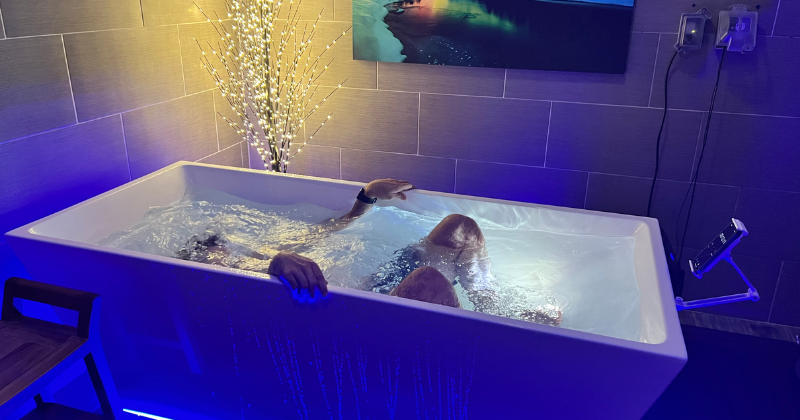
Step 1: Cold Plunge — Prime the Nervous System (Before Strength Training)
The stack begins in the cold plunge. This is a deliberate sequencing choice based on what the research actually shows about cold exposure and resistance training.
The cold-then-strength order produces two benefits. First, the catecholamine response — norepinephrine and dopamine — spikes within minutes of cold exposure and remains elevated for 1–2 hours. That neurochemical cascade improves focus, alertness, and mind-muscle connection going into your lift. Second, and more important: cold exposure immediately after resistance training has been shown in multiple studies to blunt muscle hypertrophy and strength gains by interfering with the inflammatory and mTOR signaling that drive muscle protein synthesis. A 2015 study in the Journal of Physiology found that post-workout cold immersion significantly reduced long-term muscle adaptations compared to active recovery.
The "cold-before-lift" rule applies specifically to resistance training days. If your workout is cardio-only — running, cycling, rowing, HIIT — cold plunge after exercise is fine and arguably preferable. Cardio doesn't rely on the same hypertrophy signaling pathways that cold blunts, and post-cardio cold immersion accelerates recovery, reduces perceived soreness, and supports faster return to training. The order only matters when you're trying to build or preserve muscle.
Cold also activates brown adipose tissue (brown fat) — a metabolically active tissue that burns energy to generate heat. Research suggests regular cold exposure can increase brown fat volume by up to 45%, raising baseline metabolic rate over time. Read more about cold shock proteins and the deeper benefits of consistent cold exposure →
Step 2: Tonal — Build Muscle, Raise Your Metabolism
With your nervous system primed, move to strength training on our Tonal digital weight machines. Tonal is a wall-mounted smart training system that uses digital resistance (up to 250 lbs) and AI coaching to deliver a precision strength workout in 20–40 minutes.
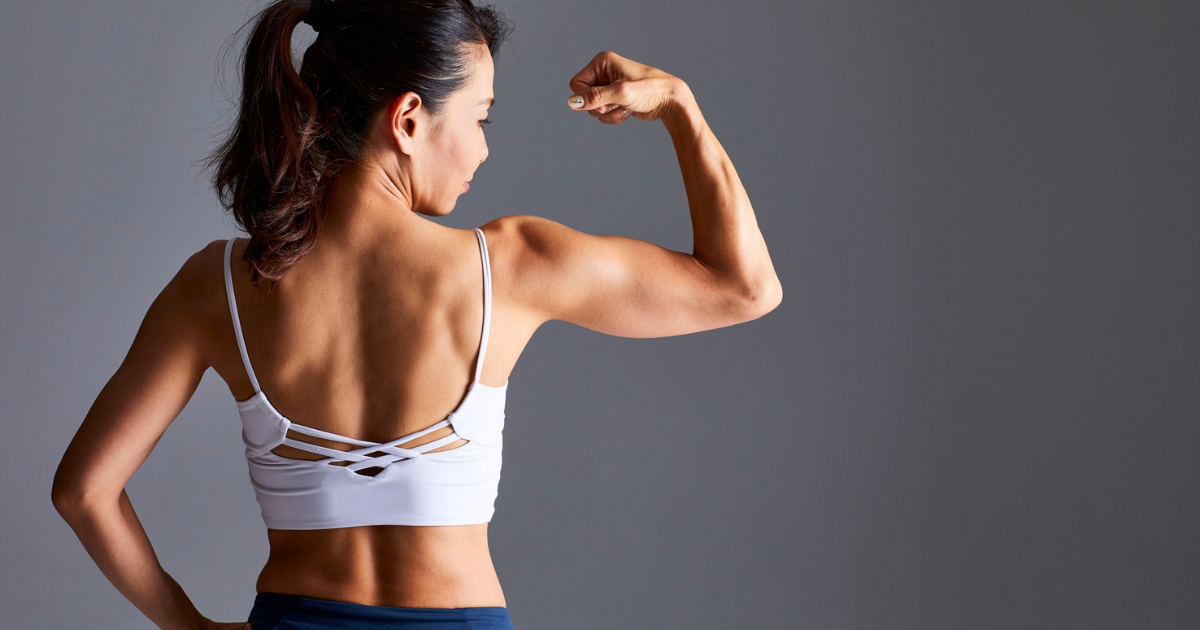
Building muscle raises your basal metabolic rate — the number of calories your body burns at rest. Every pound of muscle you add burns approximately 6–10 additional calories per day at rest, which compounds significantly over time. Resistance training also creates the muscle adaptation signal that the remaining steps in the stack are designed to amplify and protect.
Step 3: Sauna — Cardiovascular Adaptation & Extending the Workout's Benefits
Immediately after training, enter the sauna. The case for post-workout sauna use sits on three well-studied pillars: cardiovascular adaptation, hormonal amplification, and growth hormone preservation of training gains.
Cardiovascular benefits. Regular sauna use produces measurable cardiovascular adaptations — improved endothelial function, reduced arterial stiffness, lower resting blood pressure, and increased heart rate variability. The Finnish KIHD study (Laukkanen et al., 2015), which followed over 2,000 men for more than two decades, documented that frequent sauna use was associated with substantially reduced risk of fatal cardiovascular events and all-cause mortality. The mechanism appears to be a "passive cardio" effect — sauna sessions elevate heart rate into a moderate cardiovascular range, mimicking many of the adaptations you'd get from actual aerobic exercise.
Extending the workout's benefits. Sauna use after exercise amplifies the already-elevated growth hormone response from training by an additional 2–5x compared to training alone. A 2007 study by Scoon et al. found endurance athletes who completed post-workout sauna sessions over three weeks significantly improved time-to-exhaustion and plasma volume compared to training alone — suggesting the sauna drove additional cardiovascular adaptation on top of the exercise stimulus.
The sauna also produces some sweating-related elimination of metabolic byproducts, but it's worth being honest: sauna's reputation as a "detox" tool is overstated relative to the cardiovascular and hormonal benefits, which are by far the better-supported reasons to include it in the stack. Aim for 15–20 minutes at temperature.
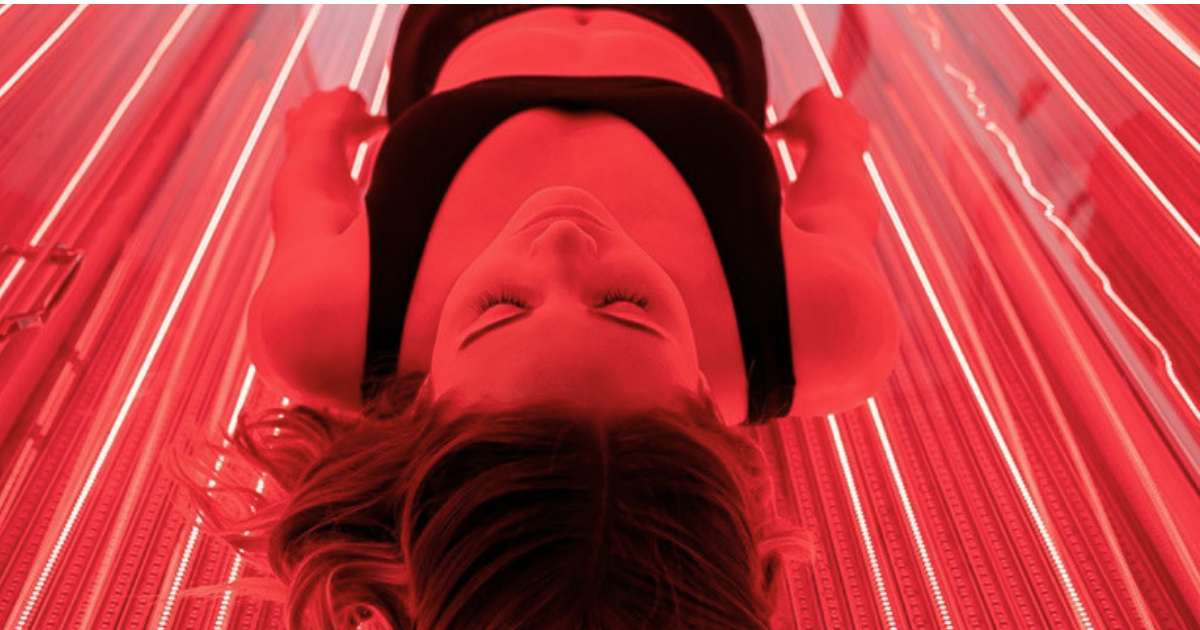
Step 4: Red Light Therapy — Accelerate Cellular Repair
Red light therapy slots perfectly after the sauna. The near-infrared wavelengths in our red light beds penetrate deep into muscle tissue, stimulating mitochondrial ATP production in exactly the cells that were stressed during training. This accelerates the repair process — reducing recovery time between sessions and amplifying the adaptation signal.
Red light also reduces residual inflammation and stimulates collagen production — which is why members consistently comment on improved skin tone alongside their physical performance gains.
Step 5: Float — Crush Cortisol and Cement the Gains
The stack ends with a float. Cortisol — your primary stress hormone — is catabolic. It breaks down muscle tissue. Even a great training session, if followed by a high-stress day, can have its gains partially undone by chronically elevated cortisol.
Float therapy produces the single most significant cortisol reduction of any modality in our toolkit. The theta state also stimulates the neurological consolidation of motor learning — meaning the movement patterns you worked on in training are more effectively encoded into motor memory. You're not just recovering. You're getting better at what you practiced.
When to Add HBOT to the Stack
Hyperbaric oxygen therapy isn't part of the foundational stack for everyone — but for specific conditions where the research supports its use, adding HBOT can be transformative. Consider HBOT as a regular addition (1–3 sessions per week) if you're dealing with any of the following:
- Persistent fatigue, low energy, or brain fog. HBOT increases tissue oxygenation and supports mitochondrial ATP production. A 2022 systematic review in Neuropsychology Review documented improvements in memory, executive function, processing speed, and global cognitive scores across multiple studies. Newer research on long COVID and post-viral fatigue specifically has shown meaningful improvements in fatigue, exercise tolerance, and cognitive symptoms with regular HBOT sessions.
- Chronic pain, inflammation, or joint discomfort. Research at wellness pressure levels (1.3–1.5 ATA) has documented reductions in pro-inflammatory cytokines including IL-6 and TNF-α — markers associated with chronic inflammation and impaired recovery. For people managing persistent joint pain or inflammatory conditions, HBOT addresses the inflammatory side of the equation in a way no other modality in the stack does directly.
- Slow recovery from training or injury. Studies on athletes have shown faster reductions in creatine kinase (a muscle damage marker) and lower soreness scores with post-exercise mild HBOT compared to passive recovery alone. Particularly relevant if you're training hard and finding that recovery between sessions is the bottleneck.
- Insulin sensitivity and metabolic health concerns. A 2025 systematic review of HBOT for metabolic disorders found improvements in insulin sensitivity (one human study showed 25–30% increase after just five sessions) and reduced adipose tissue inflammation. For body composition goals where insulin sensitivity is a limiter, HBOT is a meaningful addition.
- Cognitive support and brain health. Beyond fatigue and brain fog, the same research base that supports HBOT for cognitive function suggests potential value for general cognitive maintenance and brain health, particularly with consistent use over weeks to months.
For people without these specific concerns, HBOT is still a valuable optimization tool — but it's not the same kind of foundational requirement that the cold-strength-sauna-red light-float sequence is. Read the full HBOT guide for more on what the research supports →
Access the full stack
Every element of the Recovery Stack is available at Lost in Float — starting at $69/month with 50% off all services.
Explore memberships → Book your first sessionThe Results Our Members See
Members who follow the full Recovery Stack 3–5 times per week consistently report: noticeably less soreness and better sleep by weeks 1–2; visible changes in body composition by weeks 4–6; measurable strength improvements and sustained fat loss by weeks 8–12; and compounding results ongoing — the longer you stack, the better it works.
Lost in Float | 8244 Northern Lights Dr, Lincoln NE | 531.289.7739 | Open Tuesday–Sunday 9am–9pm