GLP-1 and Muscle Loss:
How to Keep the Muscle While You Lose the Fat
The medication quiets your appetite. What you do alongside it decides whether the weight comes off as fat — or as the muscle you spent years building. Here's the honest science, and the plan that protects it.
Let's start with what isn't in dispute: for the right person, a GLP-1 medication — semaglutide (Ozempic, Wegovy) or tirzepatide (Zepbound, Mounjaro) — is one of the most effective weight-loss tools modern medicine has produced. That's not the problem. The problem is what almost nobody plans for: when you lose weight this fast without a strategy, a meaningful share of what you lose isn't fat. It's muscle.
And not just any muscle — often the muscle you spent years building, the tissue that keeps your metabolism running, your blood sugar stable, and your body strong as you age. The medication can't tell the difference between fat and muscle. It quiets your hunger. What you do alongside it is what decides which kind of weight actually comes off.
This guide is the honest version of that story — what the research really shows (including where the scary headline numbers are overstated), who's most at risk, and the genuinely simple two-part plan that changes the outcome. We're a strength-and-recovery center, not a medical provider, so we'll stay firmly in our lane: the training and recovery side. Your medication is between you and your prescriber. And we'll end somewhere that might surprise you — on why the muscle question turns out to be good news, not bad.
The one-sentence version: The drug drives the weight loss by cutting your appetite. Your protein intake and your strength training decide whether that loss comes off as fat or as muscle. That part is entirely in your hands.
You Can Lose the Wrong Weight
When researchers look closely at body composition during GLP-1 weight loss, a consistent pattern shows up. In the landmark STEP-1 trial of semaglutide, a DXA-scanned subgroup lost substantial fat — but also a notable amount of lean body mass. Across the broader research, a widely cited figure is that up to roughly 25–40% of total weight lost can come from lean mass when there's no deliberate muscle-protection strategy in place.
That number deserves honesty in both directions. It's real and worth taking seriously. But "lean mass" is not the same as "skeletal muscle" — it includes water, organ tissue, and notably the liver, which shrinks during weight loss. Newer 2025 research suggests the pure skeletal-muscle share is lower than the headline 40% implies. So the truth sits in the middle: you will lose some real muscle if you do nothing to stop it, but it's not as catastrophic as the most alarming posts claim — and it's largely preventable.
Why It Happens — The Appetite Trap
A GLP-1 works by reducing hunger and quieting "food noise." Eating less is the entire mechanism — that's how the weight comes off. But there's a catch built into that same mechanism: when your appetite drops, your protein intake usually drops with it, right at the moment your body needs protein most to hold onto muscle.
Muscle is metabolically expensive tissue. Your body doesn't keep it around out of sentiment — it keeps it because you're using it and feeding it. Take away the training stimulus and the protein, and during a calorie deficit your body reads muscle as an expense it can cut. It will strip it alongside the fat. Not because the drug is doing something sinister, but because you've removed the two signals that tell your body to protect it.
GLP-1 medications don't directly "burn" fat or "waste" muscle. They reduce appetite, which creates a calorie deficit, which drives weight loss. In any rapid weight loss — GLP-1, crash diet, or otherwise — some lean mass comes off unless protein intake stays high and the muscle is actively loaded through resistance training. The medication is the accelerator. Your training and protein are the steering.
Why Protecting Muscle Matters More Than the Scale
It's tempting to think of muscle loss as a cosmetic concern. It isn't. Muscle is where most of your glucose gets used, which means losing it can work against the metabolic benefits you're on the medication for in the first place. It's central to strength, balance, and independence as you age. And it's the single biggest lever on your resting metabolism.
Here's the part that makes this urgent rather than optional: muscle is far easier to keep than to rebuild. An experienced lifter might add only a few pounds of muscle across an entire year of dedicated training — and rebuilding gets dramatically harder with age. In your 20s, lost muscle comes back with effort. In your 40s and 50s, the hormonal and recovery environment has shifted, and regaining it can take years, if it fully returns at all. The muscle you protect today is muscle you don't have to spend the next half-decade trying to win back.
"Keeping muscle is a training problem you can solve now. Rebuilding it later is a much harder problem — and for some people, an unsolvable one. Protect what you've already got."
The rebound risk nobody mentions
Most people don't stay on a GLP-1 forever. When the medication stops, appetite returns — and for many, so does some of the weight. Here's the trap: if you lost muscle on the way down and regain mostly fat on the way back up, you can land at a higher body-fat percentage than where you started, even at the same number on the scale. This isn't a certainty, and it's not a reason to fear the medication — but it's a real risk, and it's exactly why protecting muscle during the loss phase pays off no matter what you choose to do later.
Who's Most at Risk
Muscle loss on a GLP-1 isn't evenly distributed. The research points to a few groups who need to be most deliberate about protecting it:
- Women and older adults. Research presented at ENDO 2025 found that being female or older was associated with greater muscle loss on semaglutide — and that eating more protein helped protect against it.
- Anyone losing weight quickly. The faster the loss, the higher the share that tends to come from lean mass when there's no protective plan.
- People not currently strength training. Without a loading stimulus, muscle has no reason to stick around during a deficit.
- People struggling to eat enough protein — which, on a GLP-1, is most people, because the medication is actively suppressing the appetite that would normally drive protein intake.
The Plan: Two Things That Actually Work
Here's the genuinely good news, and it's backed by some of the strongest evidence in this whole area. A 2025 study presented at the European Congress on Obesity followed 200 adults on semaglutide or tirzepatide who were given two things alongside their medication: resistance training guidance and an individualized protein target. The result is the most important number in this article.
of weight lost can come from lean mass when nothing is done to protect muscle.
of weight lost was muscle in the 2025 ECO study — same medications, same fat loss, vastly better body composition.
Same drug. Same weight loss. A completely different outcome for your body — and the only variables that changed were protein and resistance training. That's not a supplement, a hack, or a gimmick. It's the two oldest, best-established levers in all of body composition, applied at the moment they matter most.
Lever 1 — Protein, prioritized ruthlessly
A common evidence-based target for protecting muscle during weight loss is roughly 0.7 to 1 gram of protein per pound of goal body weight per day. On a GLP-1 this is genuinely hard, because the medication is suppressing the appetite you'd normally rely on. The practical move: eat protein first at every meal, before the small amount of fullness you have gets used up on anything else, and lean on simple, easy-to-eat sources. This is general education, not a personal prescription — your prescriber or a dietitian can dial in the right number for you.
Lever 2 — Resistance training, 3–4x per week
Protein supplies the raw material; resistance training is the signal that tells your body to keep the muscle. Without the load, the protein alone won't save it. You don't need to become a bodybuilder — you need consistent, progressive strength work a few times a week, hard enough to give your muscle a reason to stay. Let the medication handle the fat. Your job is to defend the muscle.
This article covers the exercise-and-protein side of GLP-1 weight loss, which is the part within your control and ours. It is not medical advice, and it's not guidance on whether to start, continue, dose, or stop any medication. Those decisions belong entirely to you and your prescribing physician. If you have questions about your medication or any health condition, talk to your doctor.
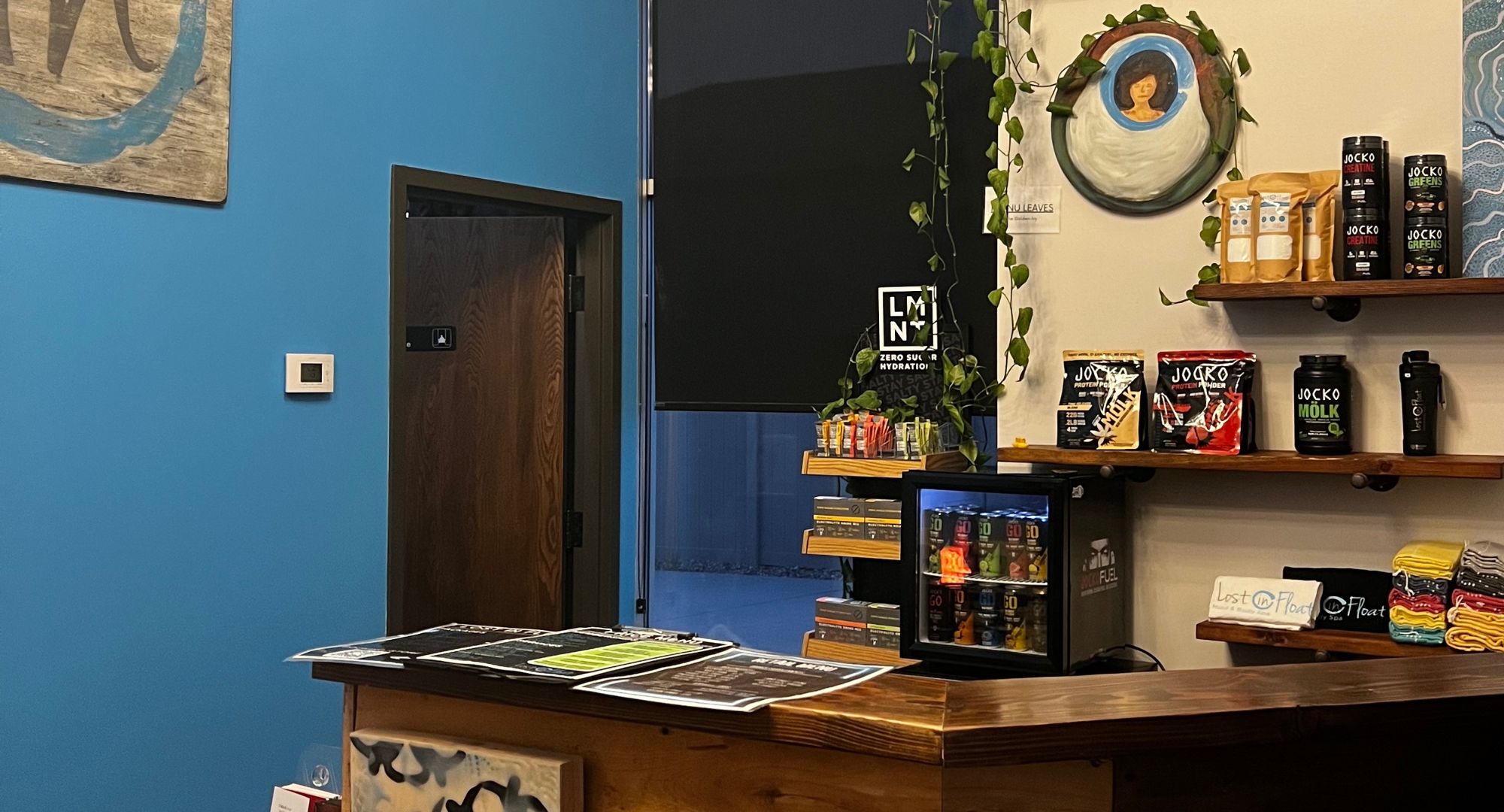
Where Lost in Float Fits In
If the two levers are protein and resistance training, the honest question is: what's the easiest way to actually do the training part, consistently, for the months it takes? That's the specific problem we're built to solve in Lincoln.
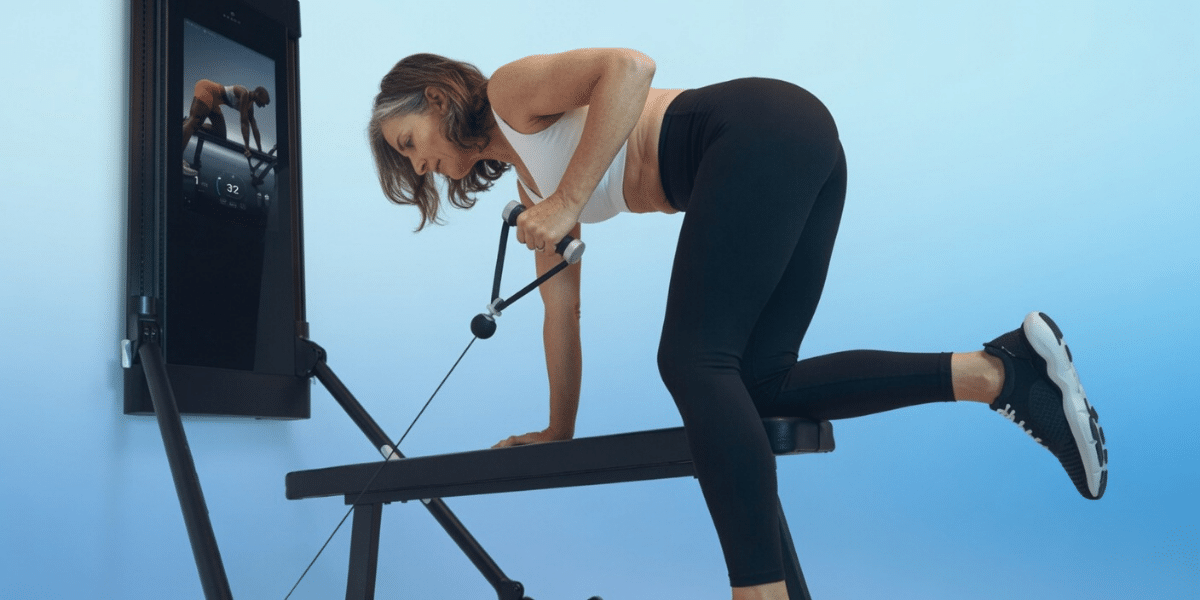
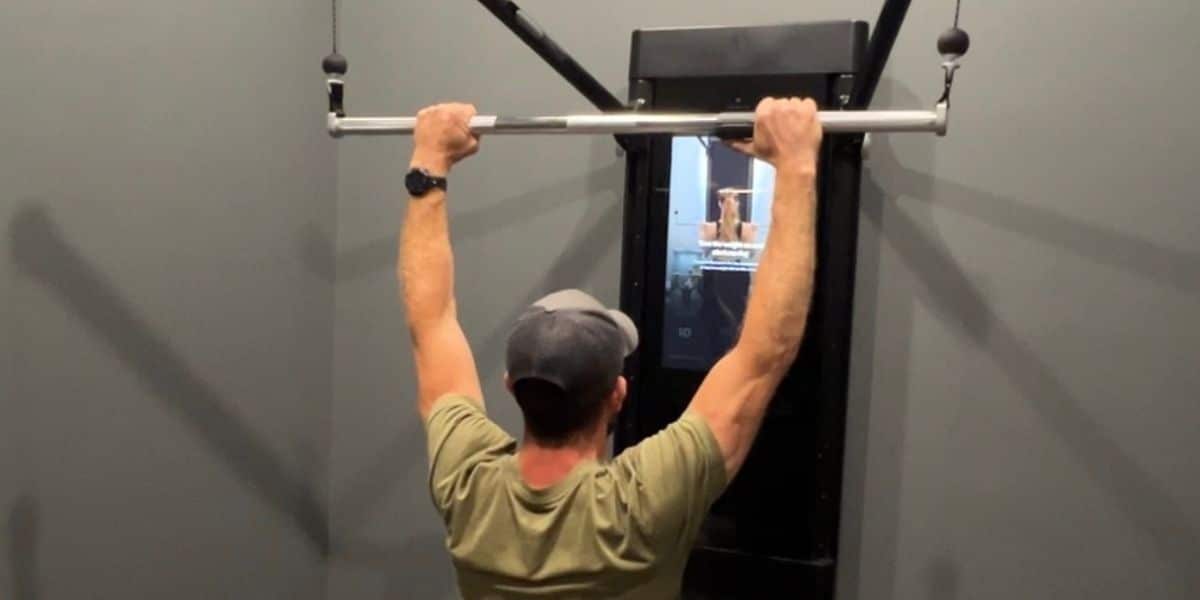
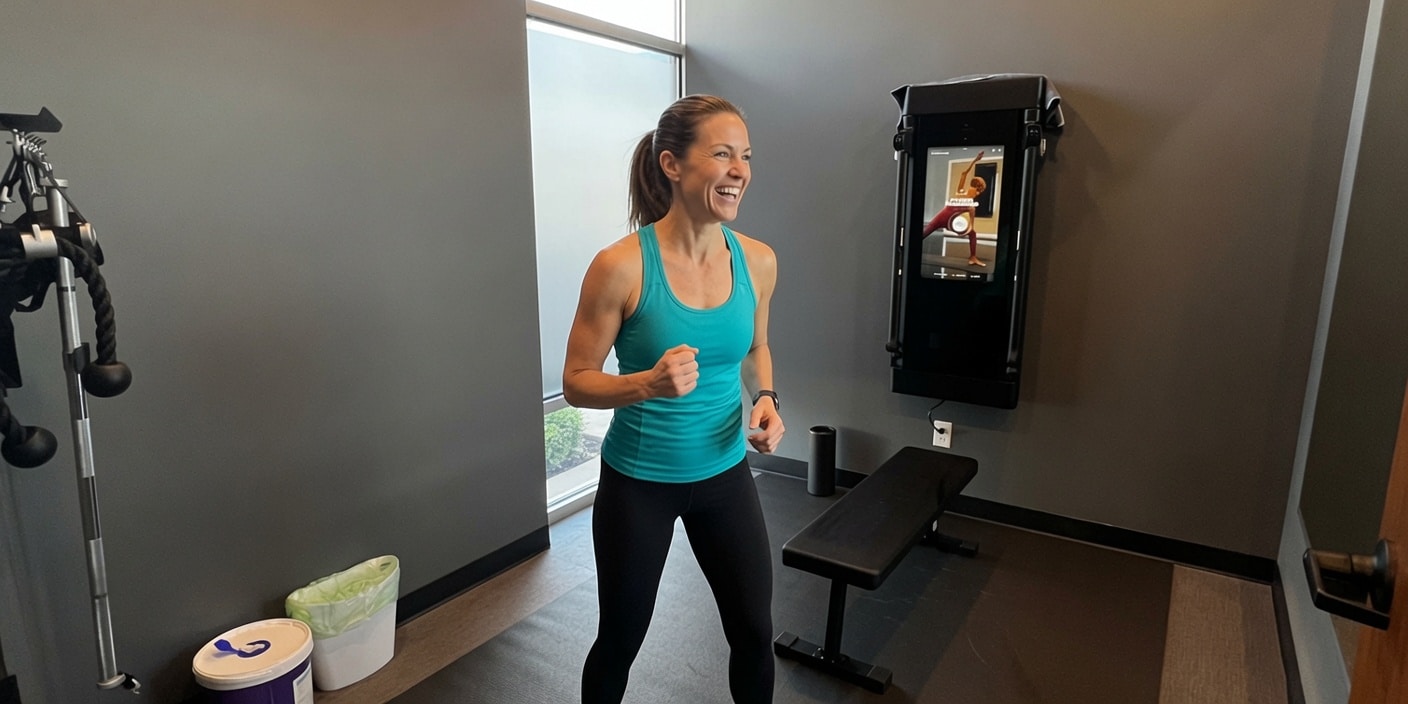
Tonal — our AI-powered smart strength system — is genuinely well-suited to this moment. It adjusts resistance to your actual capacity, which makes it approachable if you're newer to lifting (and many people starting a GLP-1 are), guides you through structured strength work so you're not guessing, and tracks your progress so you can see the muscle being defended over time. It lives in a private suite, and it's free with every membership. For the deeper science on how strength work plus recovery drives body composition, our Tonal recovery stack guide goes further.
Recovery matters more than usual here, too. When you're eating less, training consistency depends on recovering well between sessions — which is where our sauna, cold plunge, and red light therapy support the work rather than replace it. The goal isn't to add complexity. It's to make the resistance-training half of your plan something you'll actually keep doing.
Protect what you built.
Tonal smart strength training + full recovery, all in private suites · Lost in Float · 8244 Northern Lights Dr, Lincoln NE · Open Tue–Sun 9am–9pm
Book a session → See membershipsThere Was Never a Free Lunch — And That's the Good News
For a while, the GLP-1 era looked like it might be the exception to an old rule: that there's no biological free lunch. Take a shot, lose the weight, skip the work. And the appeal was obvious — for a lot of people, the medication has been genuinely life-changing.
But the muscle question is the body quietly reminding everyone that the rule still holds. You can outsource your appetite. You cannot outsource the signal that tells your body to keep its muscle. Protein and resistance training aren't optional add-ons to the GLP-1 story — they're the part physiology was always going to demand, drug or no drug. There's no version of this where you get the strong, capable, lasting result without putting something in.
Here's what we find genuinely hopeful, and it's the note we want to leave you on. We're watching the conversation shift. Some of it is people on a GLP-1 discovering — often for the first time — that they actually want to do the work, not because they have to, but because feeling strong and capable turns out to be more satisfying than any shortcut. And some of it is something else we're seeing more and more in Lincoln: people stepping back from the quick fix entirely, deciding they'd rather build it themselves from the start. Both are part of the same shift — a quiet return to valuing the work.
That reframes how to think about all of it. If a GLP-1 is part of your story, the opportunity is to treat that time as a window — to build the strength, the training habit, and the protein routine that keep working long after any medication chapter ends. (How long you're on it is entirely between you and your doctor, never us.) And if you're choosing to skip the medication and do it the long way, you already understand the thing this whole article is really about: there was never a shortcut around the work. There was only ever the work.
Different starting points, same destination. Whether a GLP-1 is part of your path or not, the strength is the part you build — and more people than we've ever seen are deciding that's the part worth having. That's the trend we're proud to be part of here in Lincoln. The version of yourself worth keeping is the one you earned.
"You can outsource your appetite. You can't outsource the work that keeps your muscle. And there's something quietly powerful in choosing to do it — you come out the other side stronger than when you started."
Studies Referenced
- Wilding JPH, et al. (2021). Once-Weekly Semaglutide in Adults with Overweight or Obesity (STEP-1). New England Journal of Medicine.
- Peralta-Reich D, et al. (2025). Resistance Training + Protein May Lower GLP-1 RA Muscle Loss. Presented at the European Congress on Obesity (ECO) 2025 · Medscape Medical News.
- Haines M, et al. (2025). Higher protein intake may protect against muscle loss in patients taking semaglutide. Presented at ENDO 2025 · Endocrine Society.
- Tinsley GM, Nadolsky S. (2025). Preservation of Lean Soft Tissue During Weight Loss Induced by GLP-1 and GLP-1/GIP Receptor Agonists: A Case Series. SAGE Open Medicine.
Not medical advice. This guide is informational and education-based. It is not medical advice and is not a substitute for guidance from your healthcare provider. GLP-1 medications are prescription drugs; decisions about starting, continuing, dosing, or stopping them belong to you and your prescribing physician. Lost in Float is a wellness and training center, not a medical provider. If you have a health condition or take medication, consult your doctor before beginning any exercise or nutrition program.