If you've been shopping for a sauna experience in Lincoln, you've probably seen the word "sauna" used to describe everything from a 195°F Finnish-style room with rocks and steam to a cocoon pod you lie in while infrared light warms your body from the inside out.
Both can genuinely help you feel better. But they work differently, they reach different temperatures, and the research base behind each is not the same. If you're choosing a wellness center partly because of its sauna — or trying to decide which type is right for your goals — it helps to understand what you're actually comparing.
This is a straightforward look at both. No agenda, just the science and some practical guidance on which type tends to work better for which goals.
How Traditional Saunas Work
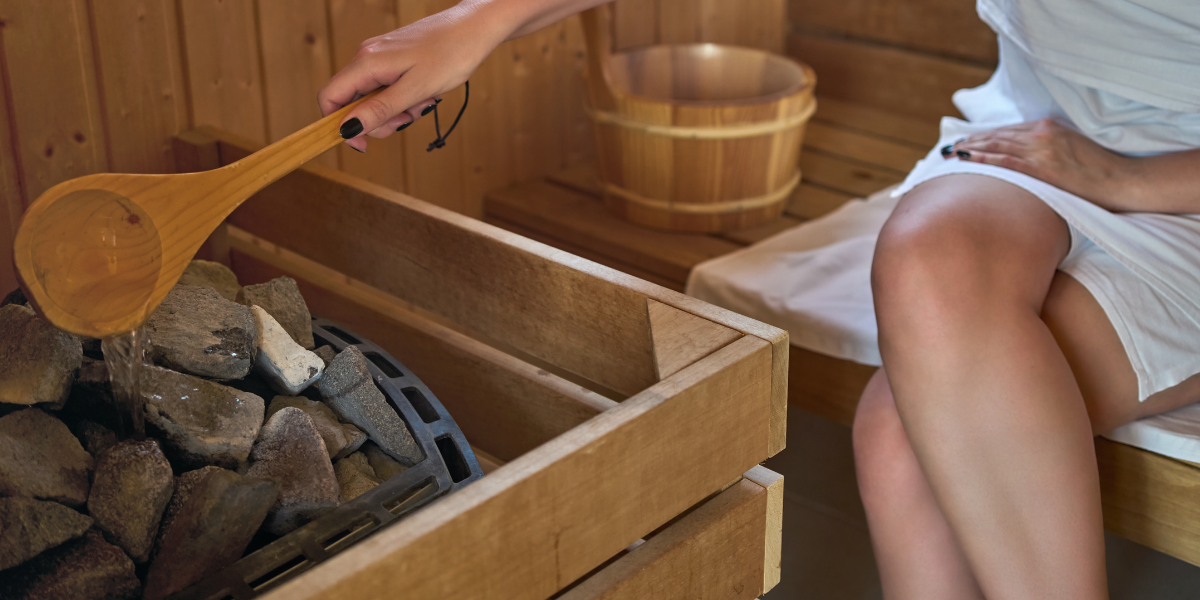
A traditional sauna — the kind with a stack of rocks, a ladle, and a bucket of water — heats the air in the room. When you pour water on the hot rocks, you release a burst of steam called löyly (pronounced "LOY-loo") in Finnish. The steam briefly spikes the humidity and the perceived intensity of the heat.
The air temperature in a properly run traditional sauna typically sits between 150°F and 195°F. At Lost in Float, our sauna runs at 195°F. Your body responds to that heat by raising its core temperature, triggering a cascade of physiological responses — increased heart rate, heavy sweating, vasodilation, and the activation of heat shock proteins.
The overwhelming majority of long-term sauna research — including the Kuopio Ischemic Heart Disease Risk Factor Study, which followed over 2,000 Finnish men for more than two decades — was conducted on traditional saunas operating at 175°F and above. When researchers found associations between regular sauna use and reduced cardiovascular mortality, reduced dementia risk, and improved markers of systemic inflammation, they were studying people sitting in rooms that reach these temperatures. Read more about what the Finnish research actually found →
How Infrared Saunas Work
Infrared saunas don't heat the air. They use electromagnetic radiation — the same part of the light spectrum that produces warmth from sunlight — to heat your body directly, bypassing the ambient temperature of the room.
Because the air doesn't need to reach a high temperature, infrared saunas operate at much lower temperatures: typically 110°F to 140°F. This makes them more accessible for people who find high-heat environments difficult to tolerate.
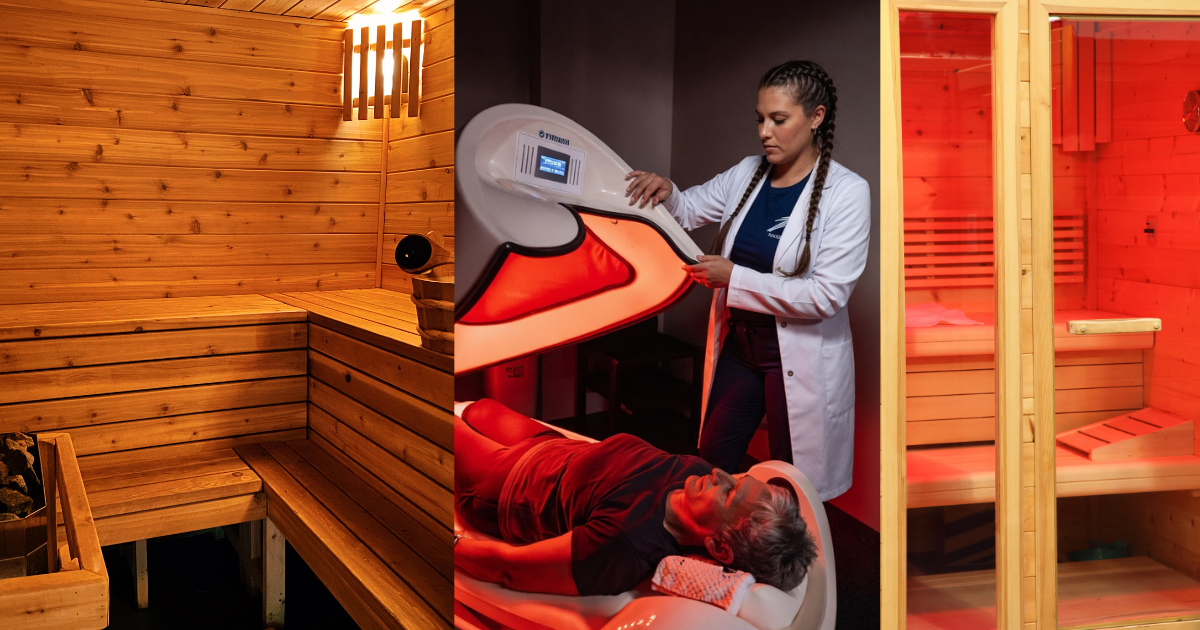
Infrared saunas come in two common formats you'll encounter in the Lincoln area. Room-style infrared saunas look more like a traditional sauna — a wood-paneled room with benches — but use infrared heating panels on the walls rather than rocks and a heater. You sit or lie in the room and the infrared elements warm your body directly. Infrared cocoon pods take a different approach: you lie inside a pod-shaped enclosure while infrared elements surround your body, with your head remaining outside. Both formats operate at the same lower temperature range and share the same fundamental limitation compared to traditional saunas — neither reaches the high ambient temperatures that the longevity research is built on.
Infrared devices — whether room-style or cocoon — use near, mid, or far infrared wavelengths, each penetrating tissue to different depths. Near-infrared stays closer to the surface; far-infrared penetrates deeper. The research on infrared saunas is real and growing, with documented benefits for relaxation, mild pain relief, and blood pressure. It is, however, a smaller and newer body of evidence than the literature on traditional saunas, and the two are not directly interchangeable in studies. Critically, regardless of the format — room or pod — infrared saunas operate in the same lower temperature range, which is the key variable in the heat shock protein, growth hormone, and cardiovascular adaptation research.
The Key Differences Side by Side
Here's where they actually differ — and where those differences matter for your goals:
| Traditional Sauna | Infrared Sauna | |
|---|---|---|
| Temperature | 150–195°F | 110–140°F |
| How it heats | Heats the air; body absorbs from environment | Heats body directly; air stays cooler |
| Steam / löyly | Yes — pour water on rocks for steam bursts | No — dry or minimal humidity |
| Head exposure | Full body including head | Cocoon format: body only, head outside. Room format: full body, but at lower ambient temp |
| Research depth | 20+ years of large-scale longevity studies | Smaller, more recent body of research — for both room and cocoon formats |
| Heat shock proteins | Strong activation at higher temperatures | Lower temperature = weaker HSP response regardless of format |
| Cardiovascular stress | Higher — which is the adaptation signal | Lower — more accessible for heat-sensitive users |
| Contrast therapy pairing | Ideal — high-temp differential maximizes vascular pump | Lower temp limits vascular contrast effect |
| Social / group use | Yes — up to 3 guests, or private Fire & Ice for 1–2 | Room-style: sometimes shared. Cocoon: individual only |
| Growth hormone (HGH) | Up to 16× baseline — temperature-dependent response | Lower temperature = reduced HGH stimulation |
Why Temperature Matters: Heat Shock Proteins
One of the most significant benefits of regular sauna use — and one of the least-discussed — is its effect on heat shock proteins (HSPs). These are protective proteins your cells produce in response to thermal stress. They help repair misfolded proteins, protect cells from damage, and play a documented role in slowing aspects of cellular aging.
The catch: HSP activation is temperature-dependent. Research suggests that the stronger the heat stimulus, the more robust the HSP response. A sauna that reaches 195°F produces a meaningfully different cellular stress response than one operating at 130°F — not because infrared is ineffective, but because the core temperature rise it produces is less dramatic.
Sauna for Muscle: Rest Days and Post-Workout Recovery
One of the most underappreciated applications of traditional sauna use is its relationship with muscle preservation and growth — both when you can't train and when you want to get more from the training you're already doing.
When you can't work out: preserving muscle mass
A series of studies has shown that regular sauna use can meaningfully slow the loss of muscle mass during periods of reduced activity — injury recovery, travel, illness, or any stretch where training is limited. The mechanism involves two pathways: heat shock protein activation (which protects muscle proteins from breakdown) and growth hormone stimulation.
Traditional sauna sessions at high temperatures produce significant acute increases in human growth hormone (HGH). Research published in Acta Physiologica Scandinavica documented that two 20-minute sauna sessions at 176°F, separated by a 30-minute cooling period, produced HGH levels up to 16 times above baseline. Growth hormone is a primary signal for muscle protein synthesis and is strongly anti-catabolic — meaning it actively inhibits muscle breakdown. For someone who is injured or temporarily unable to train, regular sauna sessions represent a meaningful tool for preserving the muscle they've built.
Research has also found that subjects who used sauna during periods of reduced training retained significantly more muscle mass than those who did not — a finding that tracks with the known muscle-protective effects of both HSPs and elevated growth hormone.
When you do work out: post-workout sauna enhances adaptation
The sauna-after-exercise protocol is where some of the most compelling recent research sits. A study by Scoon et al. (2007) found that endurance athletes who completed post-workout sauna sessions over three weeks significantly improved their time-to-exhaustion and plasma volume compared to those who trained identically without sauna sessions — suggesting the sauna drove additional cardiovascular adaptation on top of the exercise stimulus alone.
For strength and hypertrophy goals, post-workout sauna extends the elevated HGH window that exercise initiates — compounding the anabolic signal rather than competing with it. The research on this protocol consistently points to sauna after resistance training, not before, as the timing where the benefit to muscle development is strongest. Pre-workout sauna is useful for warmup and mobility, but it's the post-workout window where the growth hormone amplification effect is most meaningful.
This is one of the meaningful practical differences between traditional and infrared sauna in a fitness context. The HGH response is temperature-dependent — the higher the core temperature elevation, the more pronounced the hormonal response. At 195°F, a traditional sauna produces a far stronger HGH spike than an infrared session at 130°F. For people specifically using sauna as part of a strength or body composition program, this distinction matters.
Why Traditional Sauna Wins for Contrast Therapy
If you're interested in Fire & Ice contrast therapy — alternating between heat and cold — the starting temperature of your sauna matters enormously.
The vascular pump effect that contrast therapy produces comes from the dramatic shift between vasodilation (caused by heat) and vasoconstriction (caused by cold). The bigger the temperature differential, the more pronounced the circulatory response. Going from a 195°F sauna to a 45°F cold plunge produces a very different physiological effect than going from a 130°F infrared session to the same cold plunge.
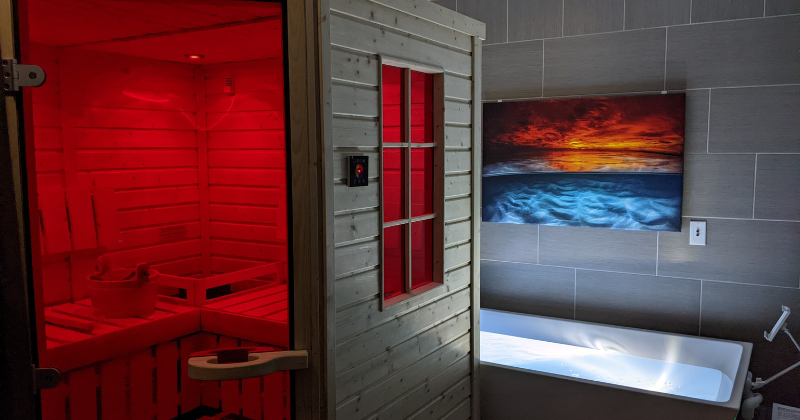
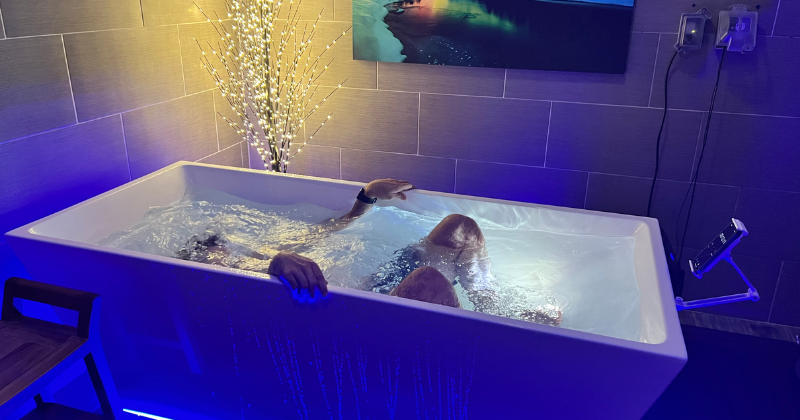
At Lost in Float, our Fire & Ice suite is a private room for 1–2 people — sauna and cold plunge together in the same space. The contrast between our 195°F sauna and 45°F cold plunge produces one of the most significant temperature differentials you can put your body through. Read the full contrast therapy guide →
"The sauna was amazing as it got quite hot. Most of the other contrast therapies had near IR technology and didn't get as warm. On the flip side, the cold plunge was as cold as 42 degrees, quite colder than the 50 degrees or so that I was used to."
Which One Is Right for Your Goals?
This isn't a simple "one wins" answer — it depends on what you're trying to accomplish.
The Sauna at Lost in Float
Our sauna is a traditional Finnish-style room with rocks you can pour water on for a burst of steam. It reaches 195°F and holds up to 3 people — large enough to bring a friend, private enough to never feel crowded. We offer both co-ed and women's-only session options.
If you want a private sauna experience, our Fire & Ice contrast suite is a private 1–2 person room with sauna and cold plunge together — the full contrast therapy protocol without sharing space with anyone.
The sauna is also free with every Lost in Float membership — daily access included. If you use it consistently, it's one of the best-value wellness investments available in Lincoln.
195°F. Rocks. Steam. The real thing.
Custom-built traditional Finnish sauna. Rocks you can pour water on, up to 3 guests, and obsessively clean. Free with every membership — or pair it with a cold plunge in our private Fire & Ice suite.
Book a session → See memberships