
Why Your First Float Is the Hardest
The Portland story that changed everything, why some nervous systems fight the tank, and what shifts on session four or five. If you tried floating once and walked away underwhelmed — read this first.
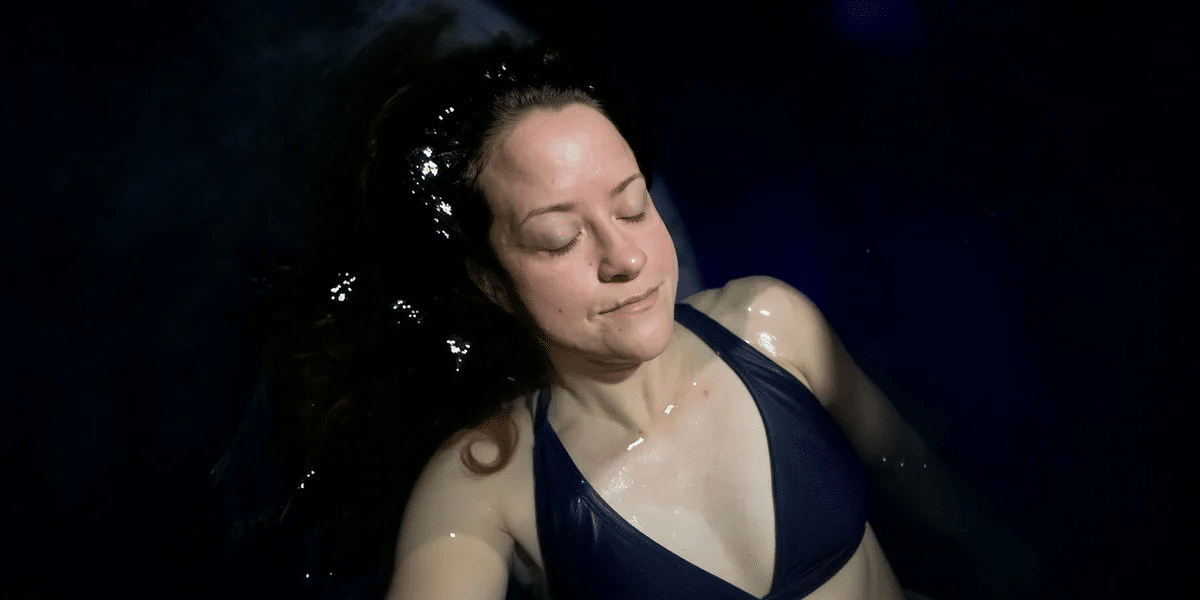
Most people get out of their first float and wonder why they waited so long. But for some of us, there's a gap nobody talks about — somewhere between your first float and the one that changes everything. And some people never make it across. Not because floating isn't for them, but because the gap is genuinely hard to explain until you've experienced it for yourself.
Most of our members feel it on float one. Others don't find it until float four. One member had a bad first, an okay second, and a terrible third — and then float four was it. She hasn't missed a week since. And then there's the "I tried it once, didn't love it, never came back" camp.
I get it. I really do. Because I was that person.
If I hadn't already committed to floating every single day for a week — I would have written it off after day one as "not being for me" and never looked back. It was only because the sessions were already scheduled and paid for that I kept showing up. Day five was the one that changed everything.
This post is the honest version of why that happens, what the research shows about it, and what to do if you're the one sitting in the tank on session one wondering why everyone else seems to love this.
A note before we start. Float therapy at Lost in Float is a wellness practice, not a medical treatment. Nothing in this post is medical advice. If you have a health condition, are pregnant, or have specific concerns about first-time floating, check with your provider first — and always tell us about anything relevant when you book.
The Portland Story
Years ago, Levi and I were in Portland exploring whether to build a business around floating. Levi had already fallen in love with it — he'd floated a handful of times before I ever tried it and was completely obsessed. Which made what happened next particularly awkward.
I signed up to float every single day for a week. Fully committing to the experience and the research. If we were going to build a business around this, I had to know it from the inside.
Day one: uncomfortable. My mind was racing. I couldn't sit still. An hour felt like an eternity.
Day two: same.
Day three and four: I started wondering if we were making a terrible mistake.
By day five I was genuinely questioning how we were going to build a business around something I didn't even enjoy. Heavy thoughts came up — grief I hadn't sat with in a long time, things I'd been too busy to feel. The kind of stuff that surfaces when you finally get quiet enough to hear it.
And then — on day five — something shifted.
I can't fully explain what happened. But the float that had been the hardest thing I'd done all week became the best thing I had ever done for myself. The same racing mind that had fought the tank for four days finally let go. And what was on the other side of that was unlike anything I had experienced.
Here's what I know now that I didn't know then: the people who struggle the most in the float tank are often the ones who need it most. The resistance is the point.
Type A. Overactive brain. Body that never fully stops. The float isn't hard for those people because something is wrong. It's hard because it's working.
The Two Camps
People who try floating tend to fall into one of two camps.
Camp one is most people. They get in, let go almost immediately, and walk out wondering why they waited so long. They're converts after session one. Levi was this person. He floated a handful of times before I ever tried it and was completely obsessed.
Camp two is where I lived. It's the smaller group — but if you tried it once and never came back, you might be in it.
Neither camp is right or wrong. What matters is that most of the messaging in the floating world is written by camp one, for camp one. The "come try floating, you're going to love it" language is true for most people — but it completely misses what happens for camp two. And that's a problem, because camp two is often the group with the most to gain.
If you're reading this because your first float was hard, or you've been talking yourself out of coming back — this is written for you.
Why Some Nervous Systems Fight the Tank
For people who find floating difficult, it's usually not the tank. It's the nervous system meeting stillness for the first time in a very long time — maybe ever.
You spend your entire day in a state of input. Notifications, decisions, conversations, noise, movement, background music, screens. Your nervous system has been conditioned to process input constantly, all day, every day. And then suddenly there is nothing — no light, no sound, no gravity, no tactile input from where the water ends and your body begins.
If your nervous system has been running in sympathetic ("fight or flight") mode more than it should be, it keeps searching for something to do. It hunts for input. It generates its own — racing thoughts, imagined itches, a sudden awareness of your own breathing. This is the equivalent of muscle memory running in a system that's forgotten how to be off.
Sensory-reduced environments like a float tank progressively deactivate the default mode network — the brain's background chatter system — and shift you toward theta brainwave states, which are the same patterns your brain produces on the edge of sleep and during deep meditation. Research has documented significant reductions in cortisol and blood pressure following float sessions, alongside measurable improvements in subjective well-being.
The catch: if your nervous system has been running hot for years, that shift can take time. If session one felt like a fight, that's your nervous system trying to make the shift and struggling. That's not failure. That's the beginning of the process.
The float isn't broken. Your nervous system isn't broken. You're just meeting a level of stillness your body hasn't had access to in a long time — and for some people, that meeting is uncomfortable before it becomes profound.
What to Expect, Session by Session
If you're in camp one, you may skip straight to the click on session one. If you're in camp two, this is what typically happens. Individual experience varies — but this pattern shows up often enough that it's worth mapping.
Your mind races. You fidget. Your hand touches your face, then your leg, then your face again. The hour feels long. You might feel like it's not working. It is working. Your nervous system is just not used to this yet. Common thought pattern: "I don't know if this is for me." Push through it if you can. This isn't the session you'll base your opinion of floating on.
Things start to soften. The resistance is still there but it's quieter. You might get 20 minutes of genuine stillness for the first time — usually toward the end of the session, right when you're starting to relax into it. You'll leave with a distinct feeling that something is different, even if you can't quite name it.
For camp two, this is often the session. The one where it clicks. Where the mind finally stops performing and just rests. Where the boundary between water and air disappears entirely. Where an hour feels like fifteen minutes and you leave wondering how you didn't try this sooner. This is the moment we spend every conversation with skeptics trying to describe — and it can't be described. It has to be experienced.
Once you've had "the session," everything changes. You stop dreading the hour and start guarding it. Regular floaters describe the practice as one of the most important things in their week — because the effects compound. Sleep improves. Mood steadies. The nervous system starts to remember what parasympathetic feels like without needing the tank to get there. That's the point of a practice: it's not about individual sessions, it's about what those sessions teach your body to do on its own.
The people who give up after one or two sessions almost always do so right before the breakthrough. And we never see them again. That genuinely breaks our hearts — because we know what's waiting on the other side.
Who Struggles Most (And Why That Matters)
If you already know you're going to be in camp two, this section is your permission slip. Because the profile of the person who struggles most in the tank is remarkably consistent — and it's not who most people would guess.
It's usually the high-achiever. The person whose brain is always on. The one who's built a life around output, productivity, being useful. The one who genuinely doesn't know what to do with themselves when nothing is required of them for an hour. The one who especially doesn't know what to do when the world goes quiet and their own thoughts get loud.
You might recognize some of these:
- Chronic stress that you've stopped noticing — your baseline is elevated, but it feels normal to you now
- Difficulty falling asleep or waking at 3am with your mind racing
- A resting heart rate that's higher than it used to be
- The inability to sit and do nothing — not even for five minutes without reaching for your phone
- A vague sense of tension in your shoulders, jaw, or lower back that never fully resolves
- Emotional stuff you've been "too busy" to process — grief, resentment, worry, guilt
All of those are signs of a nervous system stuck in sympathetic dominance. And all of them can make a first float feel hard — because the tank finally gives all of that a place to surface. Which, if you've been suppressing it for years, is a lot.
This is not a bad thing. It's the whole point.
The people I see who struggle most on session one are consistently the people who, three months later, describe floating as one of the most important things they do for themselves. Because they needed the reset more than anyone. Their bodies just had to fight through the first few sessions to trust that stillness was safe again.
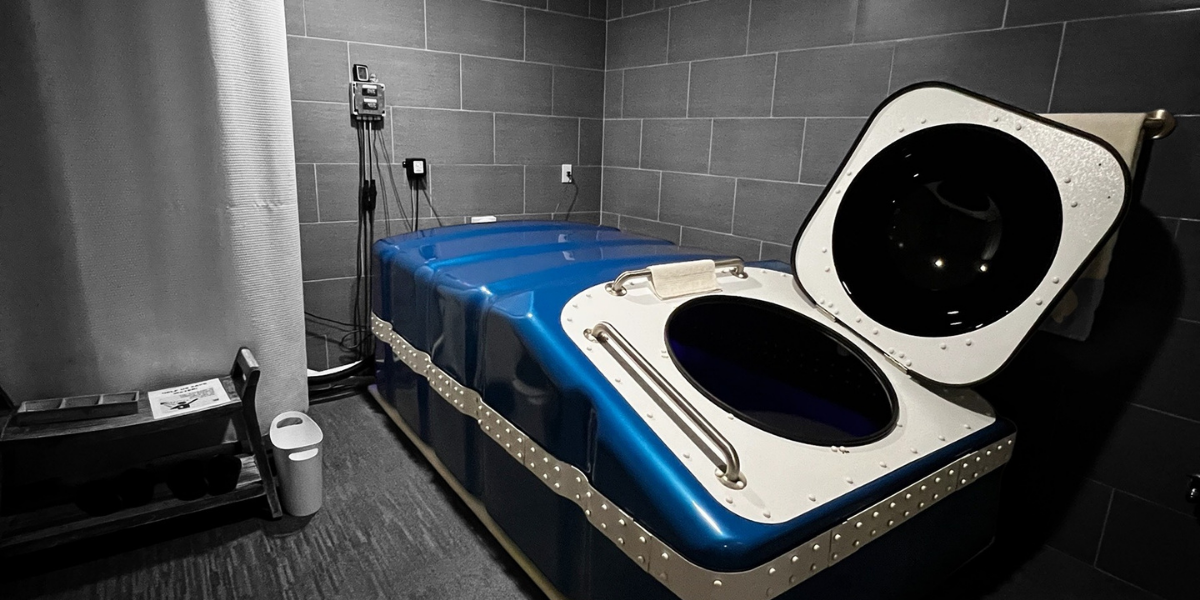
What to Do If You Had a Bad First Float
If you tried floating once and walked away underwhelmed — come back. Please. You were not doing it wrong. It was working. Sometimes the body and brain need a few more sessions to drop into the rest they've been quietly desperate for.
Here's what actually helps:
- Reset your expectations for session two. Don't come in expecting bliss. Come in expecting to practice — the same way you'd come to a gym expecting to work, not expecting to feel amazing on rep one.
- Try a different time of day. Some people float best in the morning, others late evening. If session one was mid-day and you felt too "on," try the opposite.
- Skip the caffeine before and eat a light meal 60–90 minutes before your session. Not hungry, not stuffed.
- Play with the settings. Try music for the first 10 minutes, the lights on low, or the door cracked open. Small changes can make the same 60 minutes feel completely different — and most people find they settle faster once they know exactly how they like it.
- Talk to us before you book. Reply to any email, call, text — tell us what came up on session one. We've been running float tanks since 2017 and we've heard every version of a hard first float. We can usually help you figure out what to try differently.
- Give yourself a real container. One float isn't enough data. Three or four is. Which is exactly what our Bronze membership is designed to make possible.
And if you've been floating for a while and have someone in your life who tried it once and gave up — forward this post to them. You might be the reason they give it one more shot.
The Membership Case for Commitment
When I was in Portland, I had no choice but to commit. The sessions were already scheduled and paid for. That's what got me to day five. That's what changed everything.
Here's your version of that same commitment — and honestly, it's a better deal than what I had.
The commitment that makes the breakthrough possible
The single float is $75. The Bronze membership is $69 — for a whole month, with two floats included, plus everything else.
- 2 floats included every month
- Daily sauna — free
- Daily Tonal strength training — free
- 50% off all other services — cold plunge, red light, HBOT, contrast therapy
- All credits are shareable — bring a friend or family member
- Zero contracts. Zero commitment. Cancel anytime.
Worst case: you cancel. Best case: you find the thing that changes everything.
Here's what I want you to do with it: commit to two months. That's it. Eight weeks. Enough sessions to get past the gap — wherever yours is — and find that "…oh. There it is." moment.
A membership isn't a commitment to spend more. It's a commitment to yourself that costs less per visit the more consistently you show up. And it's specifically designed to remove the "was this $75 worth it?" question from every individual session — so you can actually give the practice room to work.
Whether it clicks on your first float or your fifth, the membership makes it easier to keep showing up for the one where it all comes together.
Come back. Or come for the first time.
Two private float suites, sanitized after every session, dialed in across nearly a decade of operation. 8244 Northern Lights Dr, Lincoln NE.
Book a session → See memberships