Fire & Ice vs Cold Plunge Alone:
Which Is Right for You?
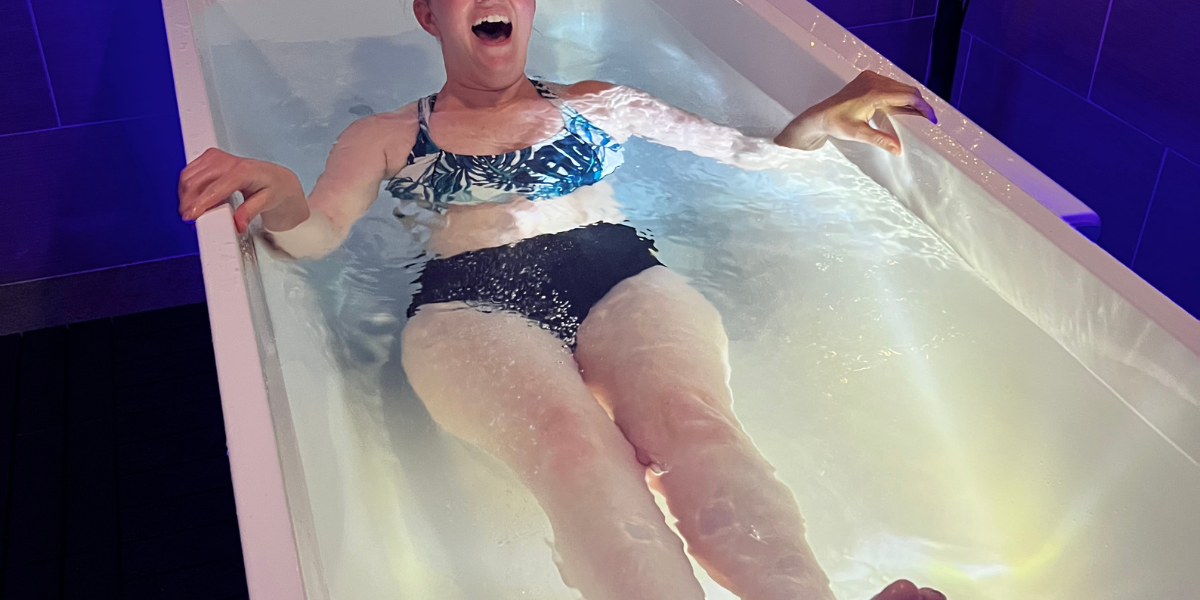
Same 45°F plunge. One comes with a 195°F sauna. Here's what's actually happening in your body during each one, what the science says, and how to pick the session that fits what you need today.
We hear some version of this question at the front desk a few times a week.
Someone's been doing our cold plunge for a month. They love it. They've stopped gasping like a startled goose on the way in. Then they look at the menu, see Fire & Ice at about twice the price, and ask: "Is the sauna actually doing anything, or is it just a really expensive warm-up?"
Fair question. Honest answer: it depends on what you want. Both sessions use the exact same 45°F plunge. What changes is everything that happens around the cold. For some goals that's a big deal, and for others it isn't. So let's break it down: what's happening in your body during each one, what the research actually says, and how to pick the right one for the day you're having.
If you read nothing else: Choose Cold Plunge for a fast, affordable reset, a pre-lift energy boost, or a habit you can do 3x a week. Choose Fire & Ice for full recovery days, stress and sleep, more total cold time, and the combined benefits of heat and cold. Most people get the best results using both, on different days.
Side by Side: What You Actually Get
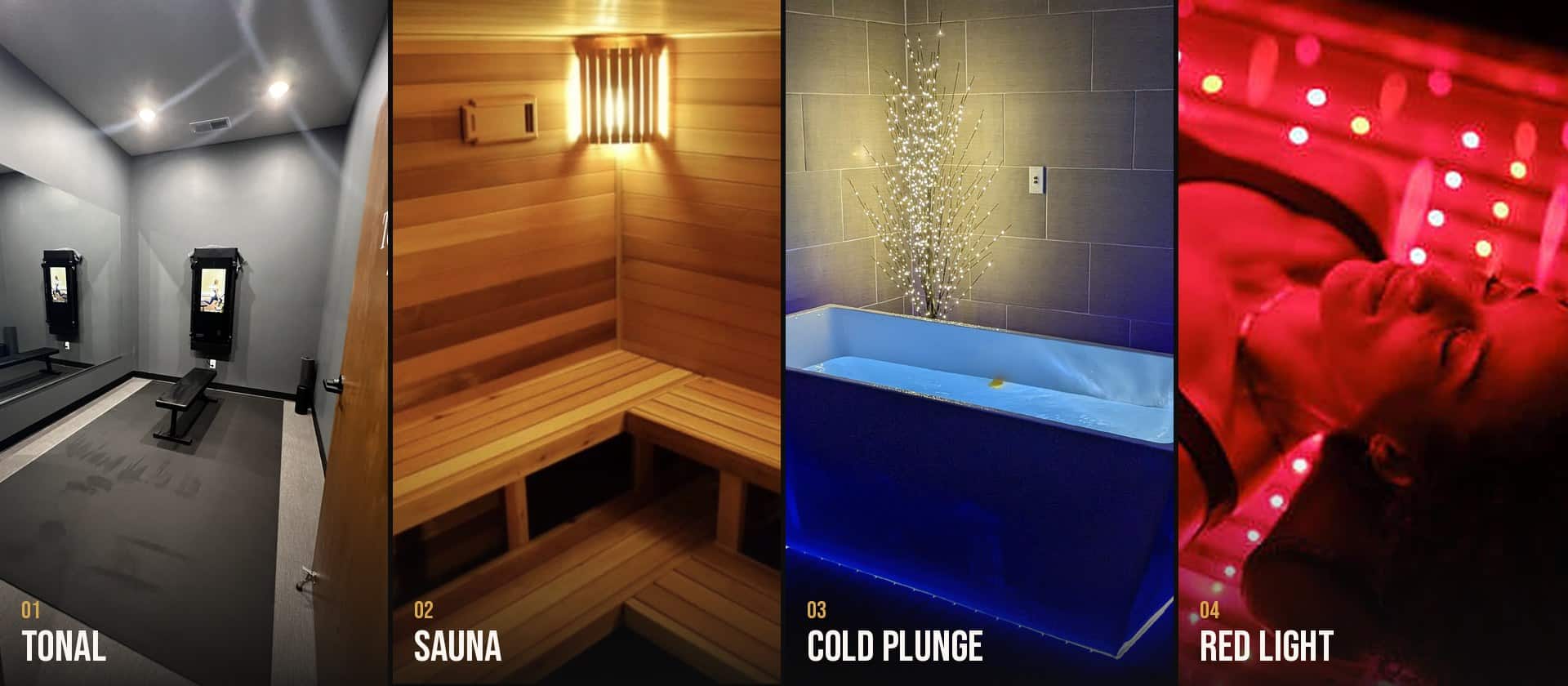
Both are private. Both use our plunge, which stays at 45°F. Here's how they compare:
| ❄️ Cold Plunge | 🔥 Fire & Ice | |
|---|---|---|
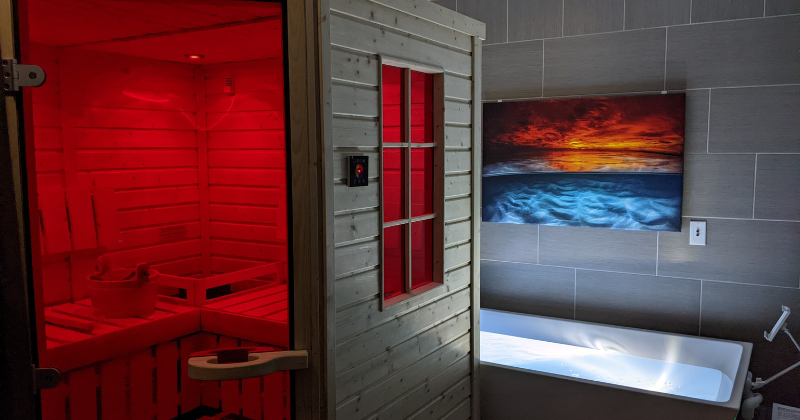
| In the room | 45°F cold plunge + private shower | 195°F traditional sauna + 45°F cold plunge, together in one private suite |
| Appointment | 20 minutes | 45 or 60 minutes |
| Time in the cold | 1–5 minutes total | 2–3 min per round × 2–4 rounds, often 6–12 minutes total |
| Price | $25 · add a guest $12.50 | 45 min $49 · 60 min $59 · add a guest $25 |
| How you'll feel | Wide awake, sharp, ready to go | Calm, loose, a little euphoric |
| Best for | Quick resets, pre-workout, busy weeks, building a cold habit | Recovery days, stress, sleep, date night, friend hangs |
Here's what surprises people: Fire & Ice usually gets you more total time in the cold, not less. On a plunge-only visit, most people tap out somewhere between one and five minutes, because your body is cold and it would like to leave now, thank you. In Fire & Ice, the sauna rewarms you between rounds, so you go back in two, three or four times. Add those rounds up and you're often well past what you'd manage in one go.
How to read the evidence in this guide
Like all our guides, we tag claims with an evidence tier, so you know the difference between "decades of solid research," "interesting early studies," and "the internet got excited."
Consistent findings across many well-designed studies. Build your plan around these.
Promising research, often smaller studies. Worth doing, but don't expect miracles.
Popular claims that outrun the evidence. We'll tell you when you're looking at one.
The Two Sessions, Up Close
Don't think of the solo plunge as the "lite" version of Fire & Ice. They're two different tools with different jobs.
Cold water reliably raises norepinephrine and dopamine, the brain chemicals behind alertness, focus and drive. In a well-known immersion study, both rose substantially and stayed up after people got out of the water. Most of our regulars describe the feeling the same way: wide awake, in a good mood, no jitters, no 2pm crash.
Cold is also one of the strongest natural signals for brown adipose tissue, a type of fat that burns energy to make heat. Research suggests regular cold exposure may increase brown fat activity over time. (We cover what that does and doesn't mean for fat loss below.)
The real advantage is practical: you're in, plunged, showered and out in 20 minutes. That makes it the easiest way to get the 2–3 sessions a week where the longer-term benefits start to build.
Fire & Ice isn't just a cold plunge with a warm room attached. The heat has its own effects, and going back and forth between the two adds something neither one does alone.
The heat. Our traditional sauna runs at 195°F. Sitting in that kind of heat raises your heart rate into a range that resembles light-to-moderate exercise. Large Finnish population studies have associated regular sauna use with lower rates of cardiovascular death over about 20 years of follow-up. That data is observational, so it can't prove the sauna caused the difference, but sauna remains one of the most studied recovery tools out there.
The back-and-forth. Heat opens blood vessels and cold narrows them. Alternate a few times and you get a pumping effect on circulation that most people feel right away: warm hands, loose muscles, everything switched on. A meta-analysis found contrast water therapy reduced muscle soreness more than passive rest after hard exercise.
The nervous system. This is the part people underrate. A cold plunge on its own is a jolt, which is great when you need to wake up and less great at 8pm when you want to sleep. Heat nudges your body toward rest-and-digest. Pair them and most people leave calm and clear instead of buzzing.
And it's honestly more fun. Bring your partner, your workout buddy, or the sister who keeps "meaning to try that." An hour of sweating, plunging and laughing at each other's breathing is a pretty great Tuesday night.
"The cold plunge is a shot of espresso. Fire & Ice is the whole morning ritual."
What About Fat Loss? The Honest Answer
It's one of the most common questions we get, and it's where a lot of the internet goes off the rails, so let's keep it real. Neither session burns off fat on its own. Strength training, protein, sleep, daily movement and a modest calorie deficit do the heavy lifting. Think of the plunge and sauna as multipliers: they help you recover, sleep and keep showing up, and consistency is what changes bodies.
That said, there is one study worth knowing. Researchers in Copenhagen looked at experienced winter swimmers who regularly alternated sauna and cold water, usually ending on cold. Compared with similar men who didn't, they showed greater cold-induced heat production. Their weekly routine added up to about 11 minutes of cold and about 57 minutes of heat, spread across a few sessions.
It's a small study of young men, so don't treat it as gospel. But notice two things: it was heat and cold together, and it was consistent. That's roughly two or three Fire & Ice sessions a week.
Don't cold plunge right after you lift. In a 12-week study, people who did cold-water immersion after strength training gained less muscle and strength than people who did an active cool-down. Cold is great, just not in the window right after training when your muscles are trying to adapt. On lifting days, plunge before Tonal or wait 4–6 hours. This is where the 20-minute solo plunge really shines.
End cold or end hot? If metabolism is the goal, finish your last round in the plunge and let your body rewarm on its own for 5–10 minutes before you shower, since making your own heat is the point. If sleep is the goal, ending in the sauna is totally fine.
Find Your Match
Three quick questions. No email required.
Quick gut check
Sample Weeks by Goal
You don't have to pick one forever. Here's how members mix them depending on what they're working toward:
Your first Fire & Ice session
Pick your temperature.
Cold Plunge from $25. Fire & Ice from $49. Or join as a member: monthly credits, daily sauna and Tonal included, and 50% off every additional full-price service. No contracts. 8244 Northern Lights Dr, Lincoln NE.
Book a session → See membershipsFrequently Asked Questions
Studies Referenced
- Šrámek P, et al. (2000). Human physiological responses to immersion into water of different temperatures. European Journal of Applied Physiology, 81(5), 436–442.
- Søberg S, et al. (2021). Altered brown fat thermoregulation and enhanced cold-induced thermogenesis in young, healthy, winter-swimming men. Cell Reports Medicine, 2(10), 100408.
- Roberts LA, et al. (2015). Post-exercise cold water immersion attenuates acute anabolic signalling and long-term adaptations in muscle to strength training. Journal of Physiology, 593(18), 4285–4301.
- Laukkanen T, et al. (2015). Association between sauna bathing and fatal cardiovascular and all-cause mortality events. JAMA Internal Medicine, 175(4), 542–548.
- Bieuzen F, Bleakley CM, Costello JT. (2013). Contrast water therapy and exercise induced muscle damage: a systematic review and meta-analysis. PLoS One, 8(4), e62356.
Not medical advice. This guide is informational and is not intended to diagnose, treat or cure any condition. Talk with your healthcare provider before starting a new heat or cold routine, especially if you're pregnant, have a heart condition or high blood pressure, or take medications that affect heat tolerance, blood pressure or blood sugar.